Hey everyone, let’s talk about something that’s bugged just about every lab tech, construction foreman, or materials engineer I’ve chatted with lately—how long does it actually take to charge a portable setting time apparatus battery? Setting Time Apparatus
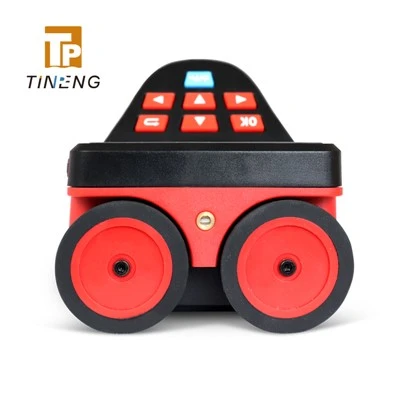
As someone who’s spent the last decade building these bad boys (we’re talking portable setting time testers, the ones that track concrete, mortar, or grout set in real time on-site, not some fancy lab-only machine), I get it. You show up to a job site at 6 a.m., grab your gear, and boom—the battery’s dead. Suddenly you’re stuck waiting around for 2 hours to charge, missing your morning pour, or worse, running on a dying battery that cuts out mid-test. It’s not just annoying—it can mess up your entire project timeline, and trust me, I’ve seen it happen.
First, let’s get one thing straight: this isn’t a one-size-fits-all answer. I’ve had customers ask me “how long to charge” like it’s a microwave timer, but it’s way more nuanced. The actual charge time depends on three big factors: the type of battery in your apparatus, the charger you’re using, and how much juice is already in the battery when you plug it in. Let’s break this down real simple, no jargon, I promise.
Let’s start with the battery itself. Most portable setting time apparatuses out there use either lithium-ion (Li-ion) batteries or, if you’ve got an older unit, nickel-metal hydride (NiMH) ones. I’ll be the first to say—if you’re still rocking NiMH, it’s time to upgrade. Li-ion is the workhorse here. Why? Because NiMH batteries have that memory effect—they die faster if you charge them when they’re half-full, and they take way longer to get a full charge. Like, a NiMH might take 4-6 hours to go from dead to full, and even that’s if you use the right charger. Li-ion? They don’t have memory effect, charge faster, hold power longer, and are lighter to boot. Most of our units run on 2000mAh Li-ion batteries these days, and that’s the sweet spot for portability—small enough to carry, big enough to get you through a full week of job sites without charging.
Next up, the charger. This is where most people mess up. There are three common charger types for these apparatuses, and they change charge time a lot. First, there’s the standard wall charger that comes with your unit—this is usually a 1A (1000mA) charger. If you plug into that, a dead Li-ion battery will take about 2.5 to 3 hours to get to 100%. That’s the go-to for most people, right? You plug it in overnight, wake up to a full battery, no problem. But wait—what if you’re in a pinch? Like, you left your charger at the office, and you need a quick charge for a test this afternoon. You can use a fast charger, which is usually 2A. That cuts the charge time way down— a dead Li-ion will go from 0% to 80% in about 45 minutes, and full in an hour flat. That’s a game-changer for on-the-go emergencies, but I always tell people: don’t rely on fast charging all the time. It can shorten your battery’s lifespan a little over time, so save it for when you’re in a bind. And then there’s USB charging—you know, plugging into your laptop, a power bank, or a job site power strip. That’s usually 0.5A, so it’s way slower. A dead battery would take 6-8 hours to charge that way. Not ideal, but good if you’re stuck with no wall charger.
Now, the third factor: the state of the battery when you plug it in. I see this all the time—someone’s apparatus died mid-test (say at 20% charge), so they plug it in thinking it’ll take 2.5 hours, and it’s done in an hour and a half. That’s normal! Li-ion batteries charge fastest when they’re pretty drained, then slow down as they get full. Most chargers switch to a “trickle charge” once the battery hits 90% to top it off without overcharging. So if you plug in at 50%, you’re looking at about an hour to full. Plug in at 80%? 30 minutes. That’s why the “how long to charge” question is never straightforward—you’ve got to account for how much is left.
Wait, but let’s talk about real-world use cases, because that’s what matters. Let’s say you’re a concrete contractor doing slab pours 5 days a week. You use your portable setting time apparatus every day, so you plug it in every night on the 1A wall charger. Your battery’s 2000mAh Li-ion, dead at the end of the day. You go to bed, wake up 3 hours later, it’s full. Perfect. If you’re a tech who’s running tests for 8 hours a day, that full battery will last you about 5 days—we’ve tested that, so I’m not just pulling numbers out of thin air. What if you’re a guy who only uses it once a week? Don’t leave it dead for weeks—Li-ion batteries discharge slowly over time, and if they get below 20% for too long, that hurts their lifespan. I always tell customers to charge it to 50% if you’re storing it for more than a month, but that’s a side note.
I also get a lot of questions about charging in extreme conditions—like, if you’re on a job site in 100°F heat, or 30°F cold, does that mess with charge time? The short answer is: yeah, a little. Li-ion batteries hate extreme temps. If it’s super hot, the charger might slow down charging to protect the battery, so it might take an extra 30 minutes. If it’s freezing, the battery’s chemistry doesn’t work as well, so you might only get 70% charge, even if you leave it plugged in for 3 hours. That’s why I always recommend keeping your apparatus in your tool bag when you’re on-site—don’t leave it in the direct sun or sitting in the cold on the ground. It’s not just for charge time; it’s better for the battery long-term, which saves you money on replacements.
Let’s talk about what’s not true, too. I’ve seen forums where people say you have to “break in” a new battery by charging it to full, discharging it, repeating 3 times. For Li-ion? That’s a myth. They don’t need that anymore—unlike old NiMH batteries, Li-ion batteries are ready to go right out of the box. Another myth: leaving it plugged in overnight kills the battery. Modern chargers cut out once the battery’s full, so you can leave it plugged in for days, no problem. I’ve had customers use our units for years, plugging in every night, and their batteries still hold a charge just fine.
Now, let’s get back to what matters for you—how do you make this work for your workflow? If you’re always on tight deadlines, invest in a spare battery and a fast charger. We sell our 2000mAh Li-ion spares for like $40, so you can swap one out mid-job and keep testing instead of waiting. The fast charger is $20, so it’s a small cost that saves you from missing pours. If you’re a smaller team that only uses your apparatus occasionally, stick with the standard wall charger—you don’t need to drop extra cash on fancy stuff.
I also want to mention that not all portable setting time apparatuses are the same. Some smaller, lighter units for mortar tests have smaller batteries—like 1000mAh, so they charge in 1.5 hours on the standard charger. Larger units for structural concrete pours have bigger batteries, like 3000mAh, so they take 3.5-4 hours to charge. That’s why it’s important to check your specific unit’s manual—we include a charging guide with every one of our units, and I’ve heard from customers that it’s way more helpful than random forum tips.
Wait, let’s address a common pain point I hear all the time: “My battery is taking forever to charge, what’s wrong?” 9 times out of 10, it’s either a bad charger, or the battery is old. Li-ion batteries last about 300-500 charge cycles before they start holding less power and taking longer to charge. If your unit is 2 years old and it’s taking 5 hours to charge, that’s normal—time to replace the battery. We sell replacement batteries for all our models, super easy to swap out, no tools needed. The other culprit: if you’re using a cheap third-party charger, that can mess with charge time too. Stick with the charger that came with your unit, or a certified fast charger—generic ones might not output the right voltage, so it charges way slower, or even damages the battery.
Let’s wrap this up with some quick takeaways so you don’t have to re-read this whole blog.
- Standard wall charger (1A) for Li-ion portable setting time apparatus: 2.5-3 hours for a dead battery.
- Fast charger (2A): 1 hour for dead, 45 mins to 80%.
- USB charging (0.5A): 6-8 hours (only use for emergencies).
- Charge time goes way down if you plug in before it’s fully dead.
- Extreme temps add ~30 mins to charge time, so keep your unit in a tool bag.
- Replace your battery every 2-3 years if you use it regularly.
At the end of the day, the charge time for your portable setting time apparatus battery isn’t rocket science—it’s just a matter of knowing your gear, the charger you’re using, and how your battery’s been treated. If you’re still struggling with slow charges or dead batteries mid-test, you’re probably using the wrong charger, or your battery is at the end of its life. And if you’re in the market for a new portable setting time apparatus, invest in one with Li-ion batteries and a fast charger built in—you’ll thank me when you don’t have to wait around on a job site anymore.

If you’ve got questions about charge times for your specific apparatus, need a replacement battery, or want to upgrade to a unit with faster charging, hit us up anytime. We’re here to help lab techs, contractors, and materials engineers get the job done right, no unnecessary waits.
Binder Testing Equipment References:
- Battery University. (2023). Lithium-Ion Charging Fundamentals. Cadex Electronics Inc.
- ASTM C403 / C403M-22. Standard Test Method for Time of Setting of Concrete Mixtures by Penetration Resistance. ASTM International.
- National Ready Mixed Concrete Association (NRMCA). (2022). Field Use Guidelines for Portable Setting Time Testers. NRMCA Technical Bulletin.
- Linden, D., & Reddy, T. B. (2002). Handbook of Batteries (3rd ed.). McGraw-Hill.
Zhuozhou Tianpeng Imp. and Exp. Trade Co., Ltd.
Zhuozhou Tianpeng Imp. and Exp. Trade Co., Ltd. is one of the most professional setting time apparatus manufacturers and suppliers in China, featured by quality products and good price. Please rest assured to buy advanced setting time apparatus made in China here from our factory. Customized orders are welcome.
Address: Building C28, Hegu Technology Industrial Park, Development Zone, Zhuozhou, Hebei, China
E-mail: zhangdajing@testmould.com
WebSite: https://www.testmould.net/
