Hey there, fellow metalworkers, maintenance techs, and random folks who’ve ever stared at a beat-up bearing and wondered what to do with it—let’s cut to the chase today: Can a diamond grinding disc actually be used for grinding bearings? As someone who’s been in the diamond grinding disc game for 8 years now (no, I’m not the new guy who just got a box of discs and still hasn’t figured out the forklift), I’ve heard this question a hundred times. Some guys swear it’s a game-changer, others say it’s the fastest way to ruin a bearing and your grinder. Let’s break this down like we’re chatting over a coffee (or a beer, no judgment) after a long day at the shop. Diamond Grinding Disc
First, let’s get the basics straight. Bearings—whether they’re the deep-groove ball bearings in your car’s wheel hub, the cylindrical roller bearings in a conveyor system, or those tiny needle bearings in a lawnmower—are made of super hard steel. Like, really hard. We’re talking Rockwell hardness (that’s the scale for how tough metal is) in the 58 to 64 HRC range. That’s no joke—regular grinding discs (the ones with aluminum oxide or silicon carbide) will struggle with this; they’ll glaze over (the abrasive grains get worn down and stop cutting) or load up (metal gunk fills the gaps between grains) in 2 minutes flat. It’s like trying to cut a steak with a butter knife.
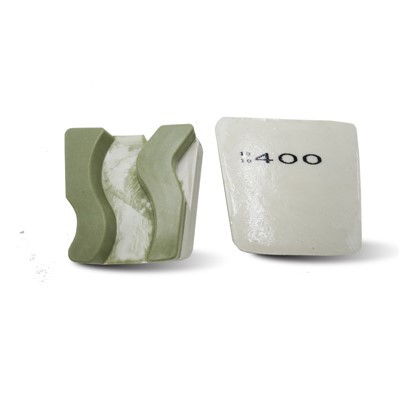
Diamond grinding discs, on the other hand, have tiny diamond crystals embedded in a bond (usually metal, resin, or ceramic) that cuts through just about any hard material—steel, carbide, even stone. So logically, you’d think “hell yeah, use a diamond disc for bearings,” right? But here’s where it gets tricky. Bearings aren’t just a hunk of hard steel. Their whole job is to be smooth, round, and precise. A bearing’s inner race, outer race, and rollers have a specific surface finish—usually around 0.2 to 0.8 micrometers Ra (that’s the measure of surface roughness). If you grind a bearing with a diamond disc without the right setup, you can mess up that finish, cause heat damage (which makes the steel brittle), or even ruin the geometry (like making the race oval instead of round).
Wait, let’s talk about when it actually works. Let’s say you’re not trying to rebuild a precision aerospace bearing—you’re a farm tech with a beat-up wheel bearing from a tractor, and you just need to grind off a rusted flange or a stubborn old seal sleeve so you can press the bearing out. That’s when a diamond disc is perfect. For that kind of rough work—removing excess material, grinding down corroded parts, or even shaping a rough bearing housing to fit a new bearing—diamond discs are way better than standard ones. I’ve had customers who fix tractors all day tell me they switch to our diamond discs for bearing prep because they don’t have to stop every 5 minutes to clean or replace the disc, like they do with aluminum oxide. That’s a big win on a farm where time is money and a broken tractor can cost you thousands in crops.
But here’s the catch: if you’re thinking of using a diamond disc to resurface the bearing race itself, like to fix a tiny groove or wear mark? Don’t do it unless you know what you’re doing. Precision grinding for bearings usually requires a specialized grinding machine (like a cylindrical grinder) with a super fine diamond wheel, and it’s done by pros who measure the roundness, surface finish, and hardness every step of the way. If you try to do that with a handheld angle grinder and a random diamond disc, you’re gonna end up with a bearing that’s either too rough (so it will overheat and fail fast) or warped (so it will make noise, vibrate, and maybe even break apart). I’ve seen a guy at a local auto shop do this once—he ground a wheel bearing on his bench grinder with a diamond disc, and a week later the wheel fell off his customer’s car. Oops. That’s not the kind of repeat business we want.
Now, let’s get into the why. Diamond discs are categorized by grit size, bond type, and concentration. For rough bearing prep (the stuff we talked about—grinding off rust, excess metal), you want a coarser grit, like 30 or 60, with a metal bond. Metal bonds are tougher, so they last longer when grinding hard steel. If you use a fine grit (like 120 or higher) on a handheld grinder, you’ll get too much heat because the fine grains don’t shed as easily, and that heat will temper the steel—lowering its hardness and making it more prone to wear. Also, make sure the disc is rated for angle grinders, and never exceed the maximum RPM (rotations per minute) listed on the disc. Going too fast can make the disc vibrate, which messes up the bearing’s shape.
Another thing to consider: safety. Grinding bearings (even the rough stuff) can kick up metal shavings, which are sharp and hot. Wear safety glasses, gloves, and a face shield if you’re doing this. Also, don’t hold the bearing too tight against the grinder—let the disc do the work. Pushing too hard will cause the disc to glaze or even crack, which is a safety hazard. I always tell my customers: “Let the abrasive do the work. You’re not saving time by mushing the grinder into the part.”
Let’s talk about real-world examples. Last month, we had a customer who runs a mining operation come to us. They had a bunch of large roller bearings for their conveyor belts that were rusted around the outer races, and they needed to grind the rust off so they could inspect the races for wear. They were using standard grinding discs before, but they had to replace them every 2 hours because they’d load up with rust and steel. We sold them our metal-bond diamond discs (60 grit), and they told us later that the discs lasted 8 times longer, and they finished the job in half the time. That’s exactly when a diamond disc for bearings works—when it’s rough material removal, not precision resurfacing.
On the flip side, we had a guy who builds custom motorcycles come in last year. He thought he could use a diamond disc to fix a pitted bearing race on a custom wheel hub. He tried it with a 100 grit resin-bond diamond disc on his bench grinder, and the result was a rough surface that made the wheel vibrate at 70 mph. He ended up having to take the bearing to a precision machine shop to resurface the race, which cost him twice as much as a good diamond disc. Lesson learned: diamond discs are great, but they’re not a magic fix for every bearing problem.
So, to circle back to the original question: Can a diamond grinding disc be used for grinding bearings? The short answer is—YES, but only for specific jobs. You can’t use it to precision-resurface a bearing’s race, but for rough prep work (grinding off rust, excess metal, seal sleeves, etc.), it’s one of the best tools out there. The key is matching the right diamond disc to the job: coarse grit, metal bond, proper RPM, and not pushing too hard.
Now, if you’re wondering which diamond disc is right for your bearing needs—whether you’re a farm tech, a auto shop owner, a mining operator, or a DIY guy working on a project—just reach out. We’ve been helping folks pick the right discs for over 8 years, and we know how frustrating it is to waste time and money on discs that don’t work. We can walk you through grit sizes, bond types, and even safety tips specific to your job. Don’t guess—chat with us, and we’ll make sure you get the right diamond disc for the job.
Diamond Frankfurt Abrasive References
- ASTM International. (2019). Standard Test Method for Rockwell Hardness of Metallic Materials. ASTM E18-19.
- Davis, J. R. (Ed.). (2001). Tool Materials. ASM International.
- Lodge, A. S., & Newton, R. (2008). Grinding of Hardened Steels: Principles and Applications. Industrial Press.
- ISO 6362-1:2017. Bearings — Surface texture — Part 1: Terms, definitions and surface texture parameters. International Organization for Standardization.
- Malkin, S., & Guo, C. (2008). Grinding Technology: Theory and Applications in Machining of Advanced Materials (2nd ed.). Industrial Press.
Quanzhou Cheefung New Materials Co., Ltd.
As one of the most experienced diamond grinding disc enterprises in China, we are able to meet the needs of the majority of our customers. Please feel free to wholesale advanced diamond grinding disc made in China here from our factory. For price consultation, contact us.
Address: Jinshan Community, Licheng District, Quanzhou City, Fujian, China
E-mail: info@prostonetools.com
WebSite: https://www.prostonetools.com/
