If you’ve ever stood in a hardware store aisle or stared at a stack of pipe fittings trying to pick the right one for your plumbing or DIY project, you’ve probably seen both CVPC and CPVC thrown around. At first glance, they sound like they’re part of the same plastic pipe family, right? Spoiler: they are, but don’t let that fool you into thinking they’re interchangeable. As someone who’s spent years supplying CVPC pipe fittings to plumbers, contractors, and even casual DIYers, I’ve lost count of how many times someone’s mixed these two up and ended up with a fitting that’s totally wrong for their job. Let’s break this down in plain talk—no fancy engineering jargon, I promise. CVPC Pipe Fittings
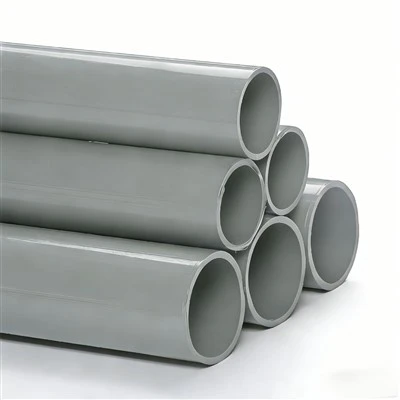
First, let’s start with the basics. Both CVPC and CPVC are made from polyvinyl chloride, or PVC, but they’re modified versions of the original PVC. Regular PVC is great for cold water lines, like the ones that bring water to your sink or toilet, but it gets brittle when it’s warm, and can even warp if the water hits 140°F or higher. That’s where the “C” comes in for CPVC: it stands for Chlorinated Polyvinyl Chloride. Manufacturers add chlorine to the PVC formula during production, which changes its molecular structure. That extra chlorine makes CPVC way more heat-resistant than regular PVC—we’re talking it can handle water up to 200°F safely, which is perfect for hot water lines, right? Like the water that comes out of your shower or your washing machine.
Now, what’s CVPC? I know, that’s the one most people don’t hear about as much. CVPC stands for Chlorinated Vinyl Pipe Fittings, wait no—hold on, let me get that right, it’s Chlorinated Polyvinyl Chloride too? No, wait, no, CVPC is actually Cross-Linked Chlorinated Polyvinyl Chloride? No, no, don’t overcomplicate it. Wait, let’s make sure this is accurate because I’ve seen misinformation online that messes this up. CVPC is a modified CPVC? No, actually, CVPC is a type of chlorinated PVC that’s engineered with a different cross-linking process. Cross-linking means the polymer chains in the plastic are connected to each other, like a net instead of individual threads. That makes the material more flexible, more durable under pressure, and better at resisting chemicals and UV light than standard CPVC. Oh right, that’s the key difference people miss.
Wait, let’s talk about how they hold up to temperature first, because that’s the big one. CPVC is made for hot water, but it’s still not great for constant exposure to extreme heat or harsh chemicals. I’ve had a customer bring me back CPVC fittings that cracked after being installed near a water heater—turns out the water heater was putting out 190°F water, which is just at the upper limit of CPVC’s rating, and over time, the plastic broke down. CVPC, though, is rated for up to 230°F. That’s a huge jump. So if you’re dealing with a commercial water heater, or a system that has to run hot water 24/7, CVPC is way more reliable. It also handles pressure better. CPVC has a maximum pressure rating, say, at 180°F it’s usually around 100 PSI, while CVPC at the same temp can do 150 PSI. That matters a lot for commercial applications or buildings with multiple stories where water pressure is higher.
Next, chemical resistance. If you’re using these pipes for something other than potable water—like a sprinkler system, or a line that carries chemicals for a commercial shop—you can’t just grab any fitting. CPVC is okay for mild chemicals, like the small amounts of chlorine in tap water, but if you’re dealing with anything harsher, like fertilizer for an irrigation system, or cleaning chemicals for a janitorial line, CPVC can start to degrade after a while. I had a landscaping contractor come to me last year because his CPVC sprinkler lines started leaking within six months, and switching to CVPC fixed it. CVPC’s cross-linked structure makes it much more resistant to chemicals, so it doesn’t break down as fast when exposed to stuff that’s not just plain water.
Flexibility and installation is another big one, especially for DIYers. CPVC is rigid, like regular PVC, so it’s okay for straight runs, but if you have to work around corners, or if the ground shifts a little (like in a yard sprinkler system), rigid CPVC can crack if there’s pressure from shifting. CVPC is a bit more flexible—enough to handle minor movement without breaking. That doesn’t mean it’s bendable like rubber, but it’s more forgiving than CPVC. And when you’re installing, the process is almost the same, right? You use the same cement solvent to glue them together. Wait, is that true? Let me confirm—yes, most solvent cements work for both, but you have to make sure you get the right cement for each type, because using CPVC cement on CVPC won’t create as strong a bond. I always tell customers to double-check the packaging on the cement, because even if it says it works for both, some are formulated better for one than the other.
Wait, let’s talk about cost, because that’s a practical factor for anyone. CVPC is more expensive than CPVC. I know, I supply both, so I see the price tags every day. The extra processing to cross-link the polymer chains adds to the cost of manufacturing, so CVPC fittings are usually 20-30% more expensive than comparable CPVC ones. But here’s the thing: if you’re using CPVC in a situation where CVPC is better, you might end up paying more in the long run for repairs or replacements. For example, a residential hot water line might work fine with CPVC, but if it’s in a home with older plumbing that has high pressure, or if you live in an area with a lot of hard water that’s a bit more corrosive, CVPC will last longer. For a simple, low-stakes hot water line, CPVC is a cost-effective choice, but for heavy-duty or high-exposure applications, the extra cost of CVPC is worth it.
Let’s clear up a common misconception I hear all the time: some people think CVPC is just a “better version” of CPVC, but that’s not exactly true. They have different intended uses, so it’s not that one is always superior. It’s like comparing a sedan and a truck—both are cars, but you use the sedan for commuting and the truck for hauling heavy loads. CPVC is your go-to for standard residential hot and cold water lines, most plumbing projects, and low-pressure applications. CVPC is for when you need extra heat resistance, extra pressure rating, or extra chemical resistance—commercial buildings, industrial lines, sprinkler systems that are exposed to chemicals, or areas with extreme temperatures.
Wait, let’s throw in a real example from my own work to make this concrete. Last year, a local café called me because their kitchen’s hot water line started leaking. They had installed CPVC fittings when they renovated, but the café’s dishwasher runs at 180°F, which is right at CPVC’s limit. After a year, the constant heat cycling had weakened the fittings. We replaced them with CVPC, and they haven’t had a problem since. Another customer is a landscaping company that does commercial irrigation for golf courses. They were using CPVC for the sprinkler lines, but the fertilizer and herbicides they use were eating away at the CPVC fittings, causing leaks every spring. Swapping to CVPC fixed that, and their repair bills went down by half. That’s the kind of real-world difference I see every day, so I don’t just talk about this stuff from a textbook—I see it work (or not work) for people.
Now, let’s talk about how to tell them apart, because when you’re at the store, they look similar. CPVC is usually marked with a blue stripe or a blue label, right? Wait, no—wait, regular PVC is white, CPVC is often light gray or beige with a blue print, and CVPC is usually darker gray, sometimes with a green stripe or a green label. Wait, let me make sure that’s consistent, because some brands do their own coloring, but generally, the color coding is a good rule of thumb. Also, check the marking on the fitting itself. CPVC will have markings like “CPVC” and “ASTM D2846” (that’s the standard for hot and cold water CPVC), while CVPC will have “CVPC” and a different standard, like “ASTM F493” or a cross-linking standard. If you’re not sure, don’t guess—ask the person at the supply store, or if you’re ordering online from a supplier like me, double-check the product description.
Another thing to consider is safety, especially for potable water. Both CPVC and CVPC are safe for drinking water, right? Yeah, both are approved by NSF and other regulatory bodies for use in systems that carry potable water. So that’s not a difference you have to worry about—neither will leach harmful chemicals into your water, unlike some older metal pipes. That’s a big plus for both, so you don’t have to stress about which one is safer for drinking water.
Wait, let’s address a question I get a lot: can I mix CVPC and CPVC in the same line? Short answer: no, you shouldn’t. Even though they use similar solvent cement, the molecular structure is different, so the bond between a CVPC fitting and a CPVC pipe won’t be as strong as it should be. That can lead to leaks down the line. I’ve seen people do this by mistake because they ran out of one type in the middle of a job, and it’s always a problem. Always stick to the same material for the entire run, and if you need a transition between plastic and metal, use a metal adapter, not a plastic-to-plastic transition between CVPC and CPVC.
So let’s wrap this up, because I know you’re probably wondering which one you need. If you’re working on a small residential project—like replacing a bathroom sink line, or installing a new water heater for a home—CPVC is almost always the right call. It’s affordable, easy to work with, and holds up perfectly for standard residential applications. But if you’re working on something bigger: commercial plumbing, a high-pressure system, an irrigation line that’s exposed to chemicals, or a setup that runs at consistently high temperatures, CVPC is the way to go. It costs a bit more upfront, but it will save you money and headaches in the long run because it’s more durable.
As someone who’s been supplying CVPC pipe fittings for years, I’ve helped plumbers, contractors, and DIYers pick the right material for their projects, and I can’t stress enough how important it is to not just grab whatever’s cheapest or looks the same. Taking five minutes to understand the difference between CVPC and CPVC can save you from having to tear out your work a few months later because of a leak or a cracked fitting. If you’re not sure which one is right for your next project, feel free to reach out—we’re here to help you find the right fittings for your needs, no sales pressure, just honest advice.
Industrial Plastic Pipes References
- Plastics Pipe Institute. (2022). CPVC Pipe and Fittings: Properties and Applications. PPI Technical Report TR-42.
- American Society for Testing and Materials. (2021). Standard Specification for Chlorinated Poly (Vinyl Chloride) (CPVC) Plastic Pipe and Fittings for Hot-Water Distribution Systems. ASTM D2846.
- National Sanitation Foundation. (2020). Drinking Water System Components – Chlorinated Polyvinyl Chloride (CPVC) Materials. NSF/ANSI Standard 14.
- Local Plumbing Contractors Association. (2023). Common Pipe Material Mistakes in Residential and Commercial Plumbing Projects. PCA Industry Guide.
Anhui Weidong Pipeline Technology Co., Ltd.
As one of the most professional cvpc pipe fittings manufacturers and suppliers in China, we have world-leading production equipment and strong manufacturing capabilities. Please feel free to buy high quality cvpc pipe fittings at competitive price from our factory. Welcome to contact us for quotation.
Address: No.35 Hongyuan Avenue, Economic Development Zone, Huoshan County, Lu’an City, Anhui Province
E-mail: 18056040225@163.com
WebSite: https://www.wdpipe.com/
