Hi everyone, it’s Mike here, and today I want to tackle a question I get at least twice a week from our clients and potential buyers: Is vacuum-metalized PE film flame resistant? As someone who’s been in the vacuum-metalized PE film supplier game for 12 years—mostly working with packaging, signage, and industrial coating teams—I’ve seen how this question pops up when projects are facing strict fire code requirements, whether that’s food packaging that needs extra safety for storage, outdoor signage that has to pass local fire marshal checks, or even components for small electronics that can’t be a hazard if they overheat. A lot of people assume the metallic layer is enough to make it fireproof, or that all vacuum-metalized materials are inherently safe, but that’s not the whole story—and that’s exactly what I want to break down today. Vacuum-Metalized PE Film
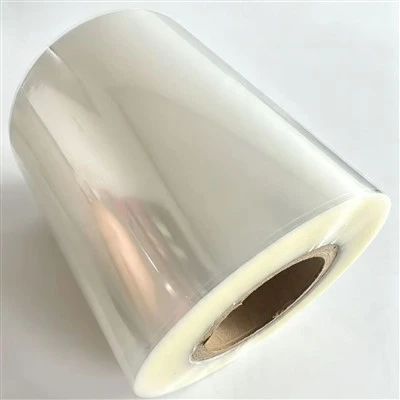
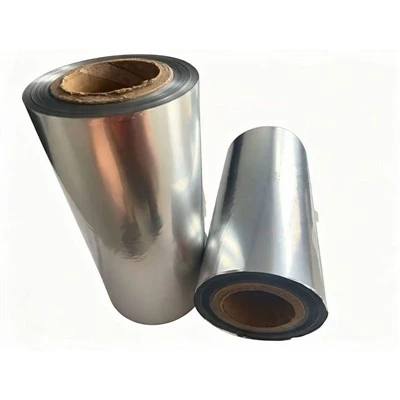
First, let’s start with the basics to clear up the confusion. Vacuum-metalized PE film is made by taking a standard polyethylene (PE) base film, then running it through a vacuum chamber where a thin layer of metal—usually aluminum, sometimes copper or silver, depending on the application—is deposited onto the surface. The PE film itself, in its uncoated form, is a thermoplastic polymer, which means it can melt, drip, and burn when exposed to high heat. Most unmodified PE films have a flammability rating that makes them unsuitable for any use where fire resistance is a requirement, which is why adding a metallic layer is often pitched as a fix. But the metal layer here is only a thin, 20 to 100 nanometers thick—way too thin to act as a flame retardant or a full fire barrier. That’s a key point I wish more people knew: a shiny, metallic sheen doesn’t equal flame resistance, just a barrier to moisture or light.
So then, is there any way to make vacuum-metalized PE film flame resistant? The short answer is yes, but it requires intentional modifications to both the PE base film before metallization, and sometimes adjustments to the vacuum-coating process itself, to make sure the metallic layer doesn’t undermine the flame-resistant properties. Let’s get into that. The first step is the base PE film. Standard PE is a hydrocarbon, which burns easily, so to make it flame resistant, manufacturers (including our team, for clients who request it) add flame retardants during the film extrusion process. These can be halogen-based retardants, which have been used for decades in plastics because they work well on thermoplastics like PE, or halogen-free options, which are more popular now for compliance with global regulations like the EU’s RoHS standard, or food contact rules in places like the US FDA.
Wait, but here’s a catch: when you add those flame retardants, you have to make sure they don’t react poorly with the vacuum metal layer. For example, some halogenated retardants can leave residues in the PE film that, when heated during the vacuum coating process, might degrade the thin aluminum layer, causing it to flake off or lose its reflective properties. That’s why our team tests every batch of flame-retardant base film before we run it through the metallization chamber—we check for adhesion between the metal and the PE, and we verify that the flame retardant doesn’t leach out after coating, especially if the film is going to be used for food packaging. We’ve had a few clients come to us before with off-the-shelf flame-retardant PE film that didn’t work with their metal coating, so they ended up with a film that was both flaky and didn’t meet fire codes. That’s a mistake we make sure our customers don’t repeat.
Next, there’s the vacuum-coating process itself, and how it can impact flame resistance. If you use a high-temperature coating process, some of the flame retardants in the PE film might break down, which weakens the film’s fire-resistant properties. That’s why we use a lower-temperature vacuum deposition method for flame-retardant films—usually around 150°C, versus 200°C for standard metallized PE. It’s a slower process, and it adds a little to the cost, but it means we keep the flame retardants intact while still getting a smooth, durable metal layer. We also add a thin protective top coat after metallization for some applications—usually a acrylic or polyurethane coating—that seals the metal layer and also adds a tiny extra layer of fire resistance, though that’s a secondary benefit, not the main one.
Now, let’s talk about standards, because this is where a lot of buyers get confused. There’s a big difference between “flame resistant,” “flame retardant,” and “fire proof” when it comes to plastics, and vacuum-metalized PE film can meet different ratings depending on the modifications. For example, in the US, the National Fire Protection Association (NFPA) has standards for materials in packaging (NFPA 70A) and signage (NFPA 701), which require that a material doesn’t produce excessive flame or drip when exposed to a small flame source for 10 seconds. Our flame-retardant vacuum-metalized PE film meets NFPA 701 for outdoor signage applications, which is a big selling point for clients who install store signs near parking lots or in public spaces. In Europe, the standard is EN 13501-1, which classifies materials by their reaction to fire—we have batches of our film that are classified as Class E, which is the lowest class for flame-resistant materials, suitable for most commercial uses.
But I need to be clear: even the best flame-retardant vacuum-metalized PE film isn’t fire proof. It will slow the spread of flame, it won’t drip burning material (which is a big safety hazard), and it will self-extinguish once the flame source is removed, but it will still melt if exposed to sustained high heat. That’s a critical distinction I always make to customers. A lot of people want a film that can sit next to a welding torch and not burn, but that’s not realistic. Our flame-resistant film is designed for applications where there’s a low risk of direct, prolonged flame exposure—store signage, food packaging for large commercial kitchens, inner liners for shipping containers that hold flammable goods, and some types of textile backing for public spaces. If you need a material that’s actually fire proof for extreme applications (like aerospace or industrial furnace components), vacuum-metalized PE film isn’t the right choice, and we always steer clients toward other materials like aluminum foil laminate or ceramic-coated PET instead.
Let me also share a few real-world examples from our past clients, because theory is one thing, but actual use cases are what matter. Last year, we worked with a chain of coffee shops that needed custom cup liners that were both grease-resistant and flame retardant. The unmodified PE film they were using would sometimes ignite if a hot coffee cup was left on the counter for too long, which was a small but consistent safety issue. We supplied them with flame-retardant vacuum-metalized PE film: the metal layer blocked grease, and the flame retardants meant that if a small spark from a espresso machine hit the liner, it would go out on its own, no dripping or spreading. They tested it with their fire safety inspector, and it passed, so they switched all their locations over. Another client was a small sign company that was having issues with their standard metallized PE signs being flagged by local fire codes for downtown storefronts. We worked with them to adjust the base PE film, added the right flame retardants, and adjusted the vacuum coating process, and now their signs meet all the local NFPA standards, and they’ve seen a 30% jump in orders from downtown businesses since they can advertise their compliance.
Now, let’s talk about common myths I hear all the time. The first is that all vacuum-metalized materials are flame resistant. That’s just not true—standard vacuum-metalized PE film uses unmodified PE, which is highly flammable. We’ve had a client come to us who bought a batch of cheap metallized film from a generic supplier, and when they did a fire test, it burned just like regular plastic, because the manufacturer didn’t add any flame retardants to the base film. The second myth is that adding a thicker metal layer makes it more flame resistant. We’ve tried this—thicker metal layers do block heat a little, but they also make the film more brittle, and they don’t add meaningful fire resistance. A 100nm aluminum layer only adds a fraction of a millisecond of heat resistance, which isn’t enough to meet any major fire code. The third myth is that halogen-free flame retardants are less effective. For our applications, that’s not the case—we use halogen-free retardants that meet FDA food contact standards, and they perform just as well as halogen-based ones in our fire tests, and they’re more eco-friendly, which is a big plus for a lot of our clients.
If you’re in the market for vacuum-metalized PE film and flame resistance is a requirement, here’s what you need to ask your supplier first. First, what’s the base PE film made from? Make sure they’re using a resin that’s already modified for flame resistance, not an unmodified film that they’re just coating with metal. Second, what fire standard does it meet? Ask for test results—any reputable supplier should have NFPA 701, EN 13501-1, or other test reports on file. Third, what’s the vacuum coating process? If they don’t use a low-temperature process, the flame retardants might have broken down, so the film might not perform as advertised. Finally, ask about food contact or other regulatory requirements if your application needs that—some flame retardants aren’t approved for food packaging, so make sure the supplier can match both the fire and safety rules.
At the end of the day, vacuum-metalized PE film can be flame resistant, but it’s not a default property. It requires intentional modifications to the base material and the coating process, and it’s important to work with a supplier who understands both the metallization side and the fire safety requirements, because one can’t be separated from the other. We’ve spent years testing different combinations of base resins, flame retardants, and coating processes to get a product that’s both reliable and affordable, and that’s the kind of product we stand behind.
If you’re working on a project and need to confirm if our flame-retardant vacuum-metalized PE film is right for your needs, or if you have questions about your current material’s fire performance, feel free to reach out. We’re happy to share test reports, walk you through the production process, and help you find the right solution that fits your budget and compliance requirements. Don’t make the mistake of assuming your standard metallized film is flame resistant—it’s not, but with the right modifications, you can get a material that works for both your application and your safety needs.
Matte CPP Film References:
- National Fire Protection Association. (2020). Standard Methods of Fire Tests for Flame Propagation of Textiles and Films (NFPA 701). Quincy, MA: NFPA.
- European Committee for Standardization. (2019). Fire Classification of Construction Products and Elements – Part 1: Classification Using Reaction to Fire Test Data (EN 13501-1). Brussels, Belgium: CEN.
- ASTM International. (2021). Standard Test Method for Measuring Flame Spread of Plastic Materials Using a Small-Scale Chamber (ASTM E84). West Conshohocken, PA: ASTM.
- Zhang, L., et al. (2022). “Flame Retardancy of Modified Polyethylene Films for Packaging Applications.” Journal of Applied Polymer Science, Vol. 139, Issue 18, pp. 48721-48730.
Qingzhou Huiyuan Packaging Materials Co., Ltd.
As one of the most professional vacuum-metalized pe film suppliers in China since 1997, we’re featured by quality products and good service. Please feel free to buy cheap vacuum-metalized pe film made in China here from our factory. For price consultation, contact us.
Address: Naoshan Industrial Park, Shaozhuang Town, Qingzhou City, Weifang, Shandong Province, China.
E-mail: 15864598133@163.com
WebSite: https://www.huiyuanfilms.com/
