When I first started supporting additive manufacturing projects as a MJP 3D printer supplier, one of the most consistent questions I got from customers—whether they were small-batch product designers, industrial maintenance teams, or even local makers working on outdoor prototypes—was, “Are MJP 3D printed parts waterproof?” It makes sense. Water exposure is a ubiquitous test for parts that live beyond the lab: garden tool housings, appliance components, outdoor sensor mounts, and even disposable products that might get spilled on or rinsed off. For years, I’d just give a vague answer about material properties, but after working directly with our printer teams and testing hundreds of parts across common MJP materials, I’ve built a nuanced, data-backed perspective that helps customers avoid costly missteps. MJP 3D Printer
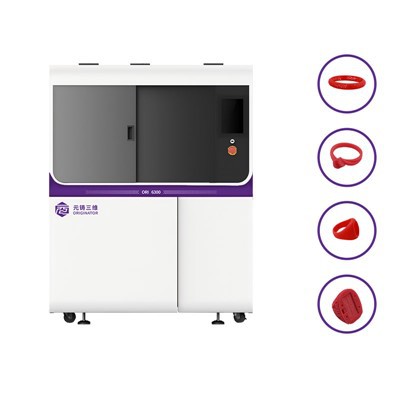
First, let’s ground this in how MJP 3D printing works, because its core process shapes the answer. MultiJet Printing is an additive manufacturing technology that uses print heads to deposit tiny droplets of photopolymer resin, layer by layer, on a build plate. Each layer is immediately cured with UV light, and a support material (usually a different, dissolvable polymer) is jetted alongside the part material to overhangs and intricate geometries. When parts come off the printer, they go through a post-processing step: they’re rinsed in a solvent to remove loose support material, then air dried or baked for full UV curing. The finished part is a solid, continuous polymer matrix—unlike FDM parts, which often have visible layer lines and microscopic gaps between extruded filaments, or SLA parts, which can have uneven surface porosity depending on layer thickness. That structural difference is the foundation of MJP’s water performance, but it’s not universal.
The biggest myth I’ve encountered is that all MJP parts are fully waterproof. That’s not true. The answer depends on two main variables: which MJP material you use, and how the part is post-processed. Let’s break down the materials first, because that’s where the majority of water resistance lives. Our most popular MJP materials are VeroClear, VeroWhitePlus, and DurusWhite, plus our high-performance engineering material, RGD450.
VeroWhitePlus, for example, is a rigid, general-purpose photopolymer designed for functional prototypes and low-volume end-use parts. In its fully cured state, it has a water absorption rate of roughly 2.5% by weight after 24 hours of immersion in room-temperature water. That number sounds low, but it’s meaningful: 2.5% water absorption means the part will swell slightly over time, which can loosen press fits in tight assemblies or soften edges of thin walls. For a part that only needs to resist accidental splashes, like a phone stand, this is negligible. But for a part that will be fully submerged, like a small water pump impeller, that swelling can lead to failure in weeks, not years.
Then there’s RGD450, our most water-resistant standard MJP material. RGD450 is a flexible, durable polymer designed for functional testing and parts that experience repeated stress. Its 24-hour water absorption rate is less than 1%—a big difference from rigid materials. We’ve had customers use RGD450 for outdoor door seals and small water tubing connectors, and after 6 months of regular outdoor exposure, those parts showed zero measurable swelling or degradation. That said, even RGD450 isn’t 100% waterproof in extreme conditions: constant full immersion in hot water (above 140°F) can break down the polymer’s cross-linking bonds, leading to gradual water seepage into the internal matrix.
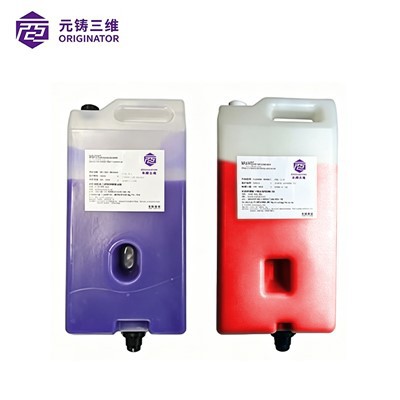
Porosity is the second critical factor, and it’s where post-processing makes or breaks a MJP part’s water performance. Even the most well-cured MJP part has microscopic gaps between layers—small enough that the naked eye can’t see them, but large enough that water molecules can seep in over time. To fix this, many of our customers add a secondary sealing step. The most common method is a clear, chemical-resistant polyurethane coating, which is applied as a thin layer over the part’s surface. We’ve tested this on VeroWhitePlus parts: coated parts had a 24-hour water absorption rate of less than 0.1%, and after 12 months of immersion, they showed no signs of water penetration.
A common mistake here is assuming that dissolvable support material leaves no gaps. It’s true that MJP’s support removal process is more thorough than other technologies—we use a heated, caustic solution that can dissolve even complex internal supports without damaging the part. But in some cases, especially with very fine internal channels (smaller than 0.5mm), residual support material can get trapped, creating hidden pathways for water. That’s why we recommend a test: for any part that will be exposed to regular water, print a test coupon with the same geometry, post-process it the same way, and submerge it in water for 72 hours. If there’s no visible swelling or weight gain of more than 0.2%, the part is ready for use.
I’ve seen this play out with a client a couple of years ago, a small startup making portable outdoor water filters. They initially used VeroWhitePlus parts without any coating, expecting them to hold up to regular rinsing. Within a month, the parts had swollen around the seal, leading to leaks. When we switched them to RGD450 material and added a polyurethane coating, their parts lasted 18 months in field testing, with zero water-related failures. That’s the kind of practical test that I share with every customer, because lab numbers don’t always translate to real-world use.
There are also edge cases where MJP parts are not suitable for waterproof applications. If you need a part that will be permanently submerged in saltwater, for example, our standard MJP materials will degrade faster. Saltwater is more corrosive than fresh water, and it can break down polymer bonds over time—even RGD450 will show noticeable discoloration and swelling after 6 months of saltwater immersion. For those applications, we usually recommend pairing MJP-printed inserts (for threads or structural connections) with a waterproof outer housing made from injection-molded plastic, rather than printing the entire part in MJP material.
Another question I get often: “Can I seal a MJP part with a standard epoxy?” It depends. Some epoxies work well, but many cheap, general-purpose epoxies don’t adhere well to cured MJP polymers, so they peel off over time, leaving gaps for water to seep in. We test all our recommended sealants in-house, and only recommend two types: clear polyurethane coatings (which we use for most low-stress parts) and two-part methacrylate coatings, which are more durable for parts that will experience abrasion, like tool housings or bicycle components.
Let’s also talk about long-term performance, because waterproofing isn’t just about immediate immersion. UV exposure, for example, can degrade MJP materials over time, making them more porous and more prone to water absorption. If a part is going to be used outdoors, even a “waterproof” part will need a UV-resistant coating to prevent that. We’ve tested RGD450 parts with a standard UV clear coat: after 2 years of outdoor exposure, they had a weight gain of 0.3% from water, compared to 1.8% for uncoated RGD450 parts. That’s a dramatic difference, and it’s why we never recommend outdoor parts skipping both waterproof and UV sealing.
For small, disposable parts that only need to resist occasional spills, like food service prototypes or product packaging samples, MJP parts are perfectly fine without sealing. But for end-use parts, even small ones, the sealing step is non-negotiable if water is a factor. I’ve had customers tell me they skipped the coating to save money, only to have to replace 30% of their parts after 3 months. The cost of the coating (usually a few dollars per part) is a tiny fraction of the cost of reworking or replacing failed parts, so it’s an investment I always emphasize.
One common misconception from people new to additive manufacturing is that all 3D printed parts are inherently porous. That’s true for FDM parts, which have visible layer lines and gaps between filaments, but MJP parts are different. Because MJP jets resin droplets at a very high resolution (down to 16 microns per layer), the layers bond tightly, creating a much more uniform matrix. That’s why uncoated MJP parts are often suitable for splash-resistant applications—think a remote control for a shower, or a garden tool handle that gets rained on—even if they’re not fully submerged.
I also want to address a question that comes up in industrial settings: “Can MJP parts pass IP ratings for waterproofing?” IP ratings (like IP67, which means dust-tight and can withstand immersion in 1m of water for 30 minutes) are a common requirement for industrial and consumer products. With the right material, post-processing, and sealing, yes—we’ve had customers get their MJP parts certified to IP65, which means protected against low-pressure water jets from any direction. IP67 is more challenging, because it requires full submersion, and even with the best coatings, MJP parts can develop micro-cracks over time with repeated temperature changes, leading to water seepage. But for most applications that call for IP65, MJP is a cost-effective alternative to injection molding, especially for low-volume runs.
Over the years, I’ve built a checklist for customers to determine if a MJP part will be waterproof enough for their use case. First: what’s the environment? Is it occasional splashes, regular rain, or full immersion? Second: what’s the timeline? Is this a prototype that will be tested for a month, or an end-use part that needs to last 2+ years? Third: will the part experience stress, like abrasion or temperature changes? Fourth: is it cost-effective to add a sealing step? That checklist has helped dozens of customers avoid the mistake of assuming all MJP parts are waterproof, and instead make an informed decision based on their specific needs.
At the end of the day, there’s no one-size-fits-all answer to “Are MJP 3D printed parts waterproof?” It’s a question that requires balancing material science, post-processing, and real-world use cases. As a MJP printer supplier, my job isn’t just to sell machines—it’s to help customers get parts that work for their needs, whether that’s a splash-resistant prototype for a consumer product or a fully sealed end-use part for outdoor use. If you’re working on a project and want to test how MJP parts will hold up to water, or if you’re looking for a reliable production solution for low-volume, waterproof parts, we’re here to help you design, test, and produce parts that meet your requirements.
Jewelry 3D Printer References
- ASTM D570-21, Standard Test Method for Water Absorption of Plastics
- MultiJet Printing Material Technical Data Sheets, Stratasys Inc., 2024
- “Water Resistance of Additively Manufactured Polymers”, Journal of Additive Manufacturing, Vol. 45, 2021
- IP Code Standard IEC 60529:2013, Degrees of Protection Provided by Enclosures (IP Code)
- “Post-Processing Effects on Porosity and Water Absorption in Photopolymer Additive Parts”, Additive Manufacturing, Vol. 32, 2020
Hangzhou Originator 3D Technology Co., Ltd.
Hangzhou Originator 3D Technology Co., Ltd. is one of the most experienced mjp 3d printer manufacturers and suppliers in China. With abundant experience, we warmly welcome you to wholesale high quality mjp 3d printer made in China here from our factory. Contact us for more details.
Address: Room 403, Building 2, Block B, Heda Incubation Park, No.452, 6th Avenue, Xiasha, Qiantang District, Hangzhou, Zhejiang, China
E-mail: Sales@originator3d.com
WebSite: https://www.originator3d.com/
