If you’ve ever stood near a construction site on a busy workday, you’ve probably felt the low rumble of heavy machinery vibrating through your boots, heard the sharp whine of hydraulics engaging, or flinched at the sudden jolt of a load being set down. For those of us who supply truck mounted cranes—workhorses of construction, infrastructure, and logistics sites—noise isn’t just an annoyance. It’s a critical factor for jobsite safety, compliance with local regulations, and even the well-being of the operators and crews who work around our equipment for 10+ hour shifts. Today, I want to pull back the curtain on the noise levels of truck mounted cranes, share what we measure as a supplier, and explain why this matters for anyone looking to rent or buy one. Truck Mounted Crane

First, let’s get clear on what we mean by “noise level” here. When we talk about machine noise, we use two standard measurements: decibels (dB) and dBA, the adjusted decibel scale that accounts for how human ears perceive sound. That’s key—two sounds with the same raw decibel rating can feel very different to a person. A jackhammer at 100 dB sounds far harsher than a lawnmower at 100 dBA, because dBA filters out low-frequency rumble that’s less disruptive to our hearing. Nearly all construction noise regulations and workplace safety standards use dBA, so that’s what we’ll focus on here.
Now, not all truck mounted cranes are the same. A 20-ton capacity crane for small residential renovation jobs will have a way different noise profile than a 100-ton model used for highway bridge construction. Let’s break down the noise sources first, because that’s where the variation comes from. Every truck mounted crane has three core components that generate noise: the base truck engine, the crane’s hydraulic system, and the upper structure (the part that lifts loads, which rotates independently of the base). Each of these has its own noise output, and the total noise you measure at a worksite is the combination of all three.
Let’s start with the base truck engine. Most modern truck mounted cranes use a diesel engine to power both the truck’s road travel and the crane’s hydraulic functions. Idling, which is how cranes spend a lot of their workday waiting for instructions, usually clocks in between 72 and 78 dBA at a distance of 1 meter from the engine. That’s roughly the same noise as a vacuum cleaner running inside your home. When you’re moving the truck on public roads, at speeds up to 55 mph, the engine noise jumps to 80 to 85 dBA—similar to a busy restaurant or a light traffic street. Once you get to the worksite, the engine is often run at a higher RPM to power heavy lifting, which cranks the noise up to 85 to 90 dBA at 1 meter. That’s comparable to a lawnmower or a power saw at close range.
Next, the crane’s hydraulic system, which is the second biggest noise source. Hydraulics work by pumping high-pressure fluid to extend cylinders, rotate the upper structure, and lift loads. When a crane is doing light work—like placing a small air conditioning unit on a roof, or lifting construction materials for a single-story home addition—the hydraulic noise is relatively low: 70 to 75 dBA at 1 meter. That’s about as quiet as a conversation between two people at a distance of 3 feet. But when you’re running a heavy lift, like hoisting steel beams for a 10-story building, the hydraulic pump works much harder. The pressure spikes, and the valves and lines create that distinct high-pitched whine that most people associate with cranes. At close range, that can hit 90 to 95 dBA. For context, that’s as loud as a motorcycle revving at full throttle, and prolonged exposure can cause temporary hearing damage if you’re not wearing protection.
The third noise source is the upper structure’s movement and load handling. When the crane’s jib rotates, or you’re extending or retracting the jib sections, the gears, bearings, and cable spools create additional noise. For light jib movements, that’s 75 to 80 dBA at 1 meter, similar to a washing machine running. For heavy load operations, where the load is being hoisted quickly or adjusted, that can add another 5 to 10 dBA, pushing total noise from the jib and upper structure up to 85 to 90 dBA.
Now, where these noise levels matter most is the distance from the crane. All the ratings I just shared are at 1 meter (about 3 feet) from the machine, but noise drops off sharply as you move away. At 10 meters (33 feet) from a typical mid-sized truck mounted crane working at moderate speed, total noise is around 70 to 75 dBA—quiet enough to hold a normal conversation without raising your voice. At 50 meters (164 feet), that drops to 60 to 65 dBA, about the noise of a library or soft background music. That’s a crucial point for residential worksites, where nearby homes are often only 20 to 30 meters away. A crane working at moderate capacity won’t disturb residents with constant loud noise, but a heavy lift on a large crane could if the crew doesn’t adjust their operations.
As a supplier, we don’t just sell cranes and ship them out without considering noise. We know that jobsite safety and regulatory compliance are non-negotiable, so we test every model in our inventory to meet both OSHA (Occupational Safety and Health Administration) standards in the U.S. and EU Occupational Safety and Health Agency (OSHAs) limits, which cap workplace exposure at 85 dBA over an 8-hour shift. If a crane’s operation produces more than 85 dBA at the operator’s position (which is usually in the enclosed cab on the base truck), we equip them with noise-dampening features: insulated cab walls, vibration-reducing engine mounts, and hydraulic mufflers that cut down on that high-pitched whine.
We also train all our clients on how to reduce crane noise on the worksite, because even a quieter crane can make too much noise if it’s operated improperly. For example, idling for long periods not only wastes fuel but increases engine noise—so we teach crews to shut off the engine when the crane isn’t in use. Using the right hydraulic pressure for the load, instead of overworking the system, cuts down on that loud whine too. We also recommend that operators stay in their enclosed cabs when possible, since the cab’s insulation reduces noise levels by 10 to 15 dBA, making 90 dBA at the source feel like 75 to 80 dBA inside the cab.
Let’s address a common myth here: a lot of people think all truck mounted cranes are equally loud, but that’s not true. Over the last five years, we’ve invested in newer, more efficient models that run on updated diesel engines with advanced exhaust systems and noise-reduction tech. For example, our 20-ton mini truck mounted crane, designed for residential and small commercial jobs, has a maximum noise level of 88 dBA at 1 meter during heavy lifting—10 dBA quieter than the older models we sold a decade ago. That might not sound like a big difference, but in real terms, it’s the gap between a noise level that’s likely to trigger a noise complaint from a nearby resident and one that stays within most municipal noise ordinances (which usually cap construction noise at 85 to 90 dBA during daytime hours, and 70 dBA after 7 PM).
We also work closely with clients who have specialized needs. If you’re working in a dense urban area with strict noise regulations, like Manhattan or downtown London, we can provide cranes fitted with additional noise-dampening kits, including hydraulic line insulation and under-crane vibration pads that reduce noise transfer to the ground. For indoor construction jobs, like building a skyscraper’s interior structure, we offer electric-powered truck mounted cranes that produce almost no engine noise—only 60 to 65 dBA when idling, and 75 to 80 dBA when lifting. That’s quieter than most office printers, so they won’t disrupt nearby workers or residents.
Of course, noise isn’t just about being polite to neighbors. Prolonged exposure to high noise levels can cause permanent hearing loss for operators, which is why OSHA requires employers to provide hearing protection for anyone working around equipment over 85 dBA. As a supplier, we don’t just sell cranes—we include free training on noise safety with every machine we deliver. We explain how to use the crane’s noise features, how to measure noise on your own worksite if you need to, and how to encourage your crew to prioritize hearing protection. We also share local noise ordinance guidelines, because violating them can lead to fines or even work stoppages.
I’ve seen this play out firsthand. A few years back, we supplied a crane to a residential renovation crew working in a suburban neighborhood outside Chicago. They were using an older model crane that hit 92 dBA at 1 meter during heavy lifts, and within a week, they received three noise complaints from nearby homeowners. They almost lost their permit to work, which would have delayed their project for months. Since then, when we supply cranes to residential worksites, we always offer to swap in newer, quieter models that meet Chicago’s strict daytime noise limit of 85 dBA. In that same neighborhood last year, another crew used one of our newer models and didn’t get a single complaint—even though they worked until 6 PM every day.
So, if you’re in the market for a truck mounted crane—whether you’re a contractor, a rental company, or a construction manager—don’t just look at lifting capacity or price. Ask about noise levels. Ask about the model’s dBA ratings, its noise-reduction features, and how it complies with local regulations. At the end of the day, a crane that’s powerful enough to lift 100 tons is useless if you can’t use it because of noise complaints, or if it puts your crew’s hearing at risk.
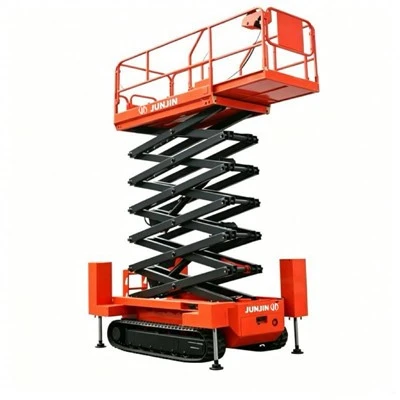
Our team has decades of experience helping clients find the right crane for their specific needs, including noise requirements. We work with contractors across residential, commercial, and industrial jobsites, and we can help you choose a model that fits both your lifting needs and your noise standards. If you’re looking to rent or purchase a truck mounted crane, or just have questions about noise levels or any other features, get in touch with our team to discuss your project details. We’re here to make sure you have the right equipment to get the job done safely, compliantly, and without unnecessary disruptions.
Telescopic Boom Lift References
- Occupational Safety and Health Administration (OSHA). Noise: Understanding the Hazards. U.S. Department of Labor, 2022.
- European Agency for Safety and Health at Work (EU-OSHA). Noise at Work: Good Practice Guide. Publications Office of the European Union, 2021.
- National Institute for Occupational Safety and Health (NIOSH). Noise and Hearing Conservation. Centers for Disease Control and Prevention, 2023.
- Crane Manufacturers Association of America (CMAA). Noise Emission Standards for Mobile Cranes. CMAA Technical Report No. 3, 2022.
- Local Government Commission. Construction Noise Ordinance Best Practices. National League of Cities, 2021.
Yantai Quanrui International Trading Co., Ltd.
As one of the most reliable truck mounted crane manufacturers and suppliers in China, we’re featured by high quality customized products. Please rest assured to buy discount truck mounted crane made in China here from our factory. Contact us for pricelist and quotation.
Address: No. 278, Sanya Road, Gaotuan Town, Fushan District, Yantai City, Shandong Province, China
E-mail: Info@quanjin1588.com
WebSite: https://www.qr1588.com/
