If you’ve ever watched a manufacturing line hum along, or seen a warehouse move pallets from one dock to another, you’ve probably spotted a conveyor chain at work. These workhorses are the unsung heroes of pretty much every industry that moves heavy stuff—from car factories to food processing plants, mining operations to e-commerce order fulfillment centers. As a conveyor chain supplier, I get asked this question all the time: “What’s the maximum load capacity of a conveyor chain?” It’s not a one-size-fits-all answer, and I’ve seen way too many folks guess wrong, which leads to headaches like broken chains, downtime, or even safety issues. Let me break this down like I would to a customer calling in for advice—no jargon, just straight talk. Conveyor Chain

First off, let’s get rid of the myth that there’s a single number for maximum load. A conveyor chain’s capacity isn’t just about how much weight it can hold—there are a ton of variables that change everything. I’ve had a customer come to me last year, saying they needed a chain that could haul 10,000 pounds of steel coils. They ordered the standard chain we sell for heavy-duty pallet handling, and within a week, it snapped. Turned out their line had a 3-degree uphill slope, plus they were starting and stopping constantly—sudden shocks on start-up add way more stress than just static weight. That’s the key: maximum load is dynamic, not static. Static load is just the dead weight of what you’re moving, but dynamic load includes slope, acceleration, speed, friction, and even the way the chain is supported (like the rollers it runs on).
So where do we even start to calculate this? Let’s talk about chain construction first. Not all conveyor chains are the same. The most common types you’ll see are roller chains, blade chains, and engraved link chains, each built for different jobs. Roller chains are super versatile—used in everything from small packaging lines to big mining conveyors. Their load capacity depends on things like the pitch (the distance between each roller center), the diameter of the rollers, and the thickness of the side plates. For example, a 1-inch pitch roller chain might have a static load capacity of around 2,000 pounds, but a 2-inch pitch heavy-duty roller chain can handle 10,000+ pounds—if all other conditions are right. Blade chains, on the other hand, have flat, wide links instead of rollers, so they’re better for carrying flat loads like pallets. Their capacity is based on the length and thickness of the blades, so a 12-inch blade chain might max out at 15,000 pounds, but again, that’s for steady, horizontal movement.
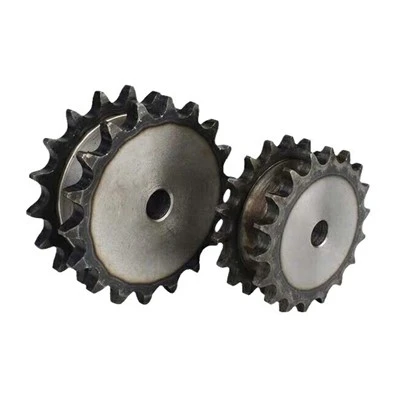
Wait, but that’s just the chain itself—what about the sprockets? Sprockets are the toothed wheels that pull the chain, and if they’re worn or the wrong size, they’ll cut the chain’s capacity in half. I remember another customer who was running a 6-inch pitch roller chain with a worn sprocket; even though the chain was rated for 8,000 pounds, the sprocket was misaligned, so the chain was pulling unevenly and only could handle 3,000 pounds before it stretched too much. Misalignment is a big one—even a 1-degree tilt in the sprockets creates extra friction and stress, which reduces load capacity over time. That’s why when a customer asks for max load, I always ask if their sprockets are new and properly aligned, because skipping that step is a recipe for disaster.
Then there’s the operating environment. If you’re running a conveyor in a hot foundry where temperatures hit 500°F, steel chains lose strength—like, a lot. Standard carbon steel chain might be rated for 10,000 pounds at room temp, but at 500°F, that drops by 20-30%. We sell high-temperature alloy chains for those jobs, which keep 90% of their strength up to 1,000°F. What about corrosive environments, like a food processing plant with regular washdowns? Standard steel will rust, so we use stainless steel chains, which have lower maximum load than carbon steel, but they’re way more durable. A 2-inch pitch carbon steel chain might do 10,000 pounds, but the same pitch 304 stainless is around 7,500 pounds. You can’t just swap in a higher-rated chain if your environment is going to eat it—corrosion and temperature are non-negotiable factors.
Speed and movement also play a huge role. Conveyor chains don’t just sit there holding weight—they’re moving. If you’re running a chain at 10 feet per minute, its capacity is higher than if you’re running it at 100 feet per minute. Higher speed means more flexing at each link, which leads to fatigue over time. Fatigue is what breaks chains after months or years of use, not just a one-time overloading. Let’s say a chain is rated for 8,000 pounds at 20 feet per minute, but at 100 feet per minute, that drops to 5,000 pounds. Push it faster, and you’re asking for links to snap earlier than they should. Also, sudden starts and stops—like in a distribution center where pallets are loaded and unloaded quickly—create impact loads that add to the total stress. I always tell customers to add a 20-30% buffer to their dynamic load to account for that, because no conveyor line is perfectly smooth.
So how do manufacturers (that’s us, by the way) actually test these capacities? We don’t just pull a chain until it breaks—we test it under real-world conditions. For static load testing, we hang weights from a section of chain until it stretches or breaks, but that’s just a baseline. For dynamic load testing, we run the chain for millions of cycles (that’s like 10 years of regular use) under different loads, speeds, slopes, and temperatures to see when it starts to fail. The maximum capacity we publish is usually a conservative number—we don’t want to sell a chain that breaks in a month, so we build in a safety factor, usually 3:1 or 4:1. That means if a chain has a published max load of 5,000 pounds, the actual breaking point is around 15,000-20,000 pounds. But why not push it closer? Because that safety factor is what prevents downtime. If you run a chain right up to the breaking point, even a tiny change in conditions—like a slight overload from a misloaded pallet—will break it.
Now, let’s talk about common mistakes I see customers make when choosing a conveyor chain. The biggest one is going only by the published max load number without considering their specific application. A guy last month wanted a chain for his small food packaging line, so he ordered a heavy-duty roller chain rated for 10,000 pounds. It worked, but it was overkill—cost him twice as much as he needed to, and was heavier, so it put extra stress on his motors. The opposite mistake is underbuying: a customer with a mining conveyor hauling ore tried to use a chain rated for 6,000 pounds, and when the ore piles sometimes hit 7,000 pounds, the chain snapped and shut down the mine for 12 hours. That cost him way more in lost production than the extra cost of a higher-rated chain would have.
Another mistake is ignoring maintenance. A chain’s capacity doesn’t stay the same forever. If you don’t lubricate it regularly, friction builds up, which reduces load capacity and wears out the links faster. A chain that’s well-lubricated might keep 90% of its rated capacity for years, but a dry chain could drop to 60% after just a few months. Worn links, stretched chain, or damaged sprockets all lower capacity too—so even if you bought the right chain for your job, skipping maintenance will make it weaker over time.
So if you’re trying to figure out the maximum load capacity for your conveyor, what should you do? Don’t just look for a number online or on a spec sheet. Start by listing all the details of your application: what are you moving (weight, size, shape)? What’s the conveyor’s slope (if any)? What’s the operating speed, and do you have sudden starts/stops? What’s the environment (temperature, moisture, chemicals)? And how long do you want the chain to last—1 year, 5 years, 10 years?
That’s where we come in. As a conveyor chain supplier, I don’t just say “this chain can do X pounds.” I ask you those questions, run the numbers, and recommend the right chain that fits your needs—not just the biggest, most expensive one. Last week, a customer with a small e-commerce fulfillment line asked for max load; he was moving 1,500-pound pallets, horizontal, at 50 feet per minute, in a climate-controlled warehouse. We recommended a 1.5-inch pitch roller chain, which has a rated max load of 3,500 pounds—way more than his 1,500 pounds, with a safety factor to cover any sudden shocks. It’s been running for 6 months with zero issues.
I’ve been in this business for over a decade, and the number one thing I’ve learned is that conveyor chain capacity is personal. There’s no universal answer, but taking the time to match the chain to your specific job saves you from so many headaches. If you’re tired of dealing with broken chains, unexpected downtime, or paying too much for a chain that’s overkill, reach out to talk through your needs. I’m here to help you find the right conveyor chain that fits your load, your line, and your budget—no guesswork, just straight advice.
Gear References
American Chain & Cable Company. (2022). Conveyor Chain Design and Application Guide.
International Organization for Standardization. (2019). ISO 1247: Chains, sprockets and accessories for conveyors – Roller chains, attachment chain and sprockets.
McGraw-Hill Education. (2021). Material Handling Systems: Design and Operation.
Anhui Huihuang Chain Transmission Co., Ltd.
Anhui Huihuang Chain Transmission Co., Ltd. is one of the most professional conveyor chain manufacturers and suppliers in China, also supports high quality customized service. Please feel free to buy discount conveyor chain made in China here from our factory. Welcome to contact us for pricelist and free sample.
Address: NO.3 YONGQIANG ROAD. JIXI.ANHUI.CHINA
E-mail: 754590660@qq.com
WebSite: https://www.hhchains.com/
