If you’re sourcing interconnect solutions for compact, high-density electronics—whether it’s consumer hardware, industrial control systems, medical devices, or automotive sensors—you’ve likely stumbled on 0.80mm pitch connectors. As a supplier of these components, I’m asked this question constantly: What is the dielectric strength of 0.80mm pitch connectors? It’s not a one-size-fits-all answer, and understanding it matters more than you might think. Misspecify dielectric strength, and you’re looking at intermittent performance, component failure, or even safety risks. Let’s break this down, rooted in real-world engineering and the products we manufacture every day. 0.80mm Pitch
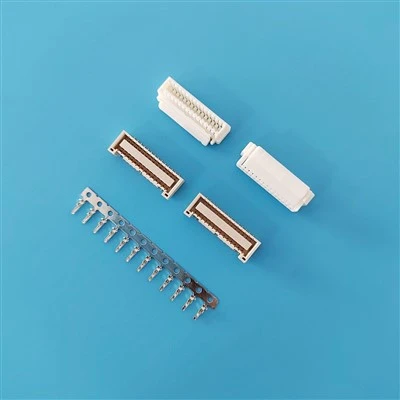
First, let’s define the basics to set context. Dielectric strength, in simple terms, is the maximum voltage an insulating material can withstand before it breaks down and becomes conductive—causing an electrical arc or short circuit. For connectors, this isn’t just a number pulled from a spec sheet; it’s tied to three key variables: the connector’s design, the materials used, and the environmental conditions it will operate in. For 0.80mm pitch connectors, pitch refers to the center-to-center distance between adjacent pins—smaller pitch means closer pins, which means less space for insulation between them, so dielectric strength is a critical differentiator between low-quality, mass-produced parts and robust, application-ready connectors.
Now, to get to the core: the typical dielectric strength of our standard 0.80mm pitch connectors, per industry test standards (IPC-6013, the go-to for interconnect reliability, and IEC 60068 for environmental testing), ranges from 1,500Vrms to 2,500Vrms when measured between adjacent pins under standard, dry conditions (23°C, 50% relative humidity). Wait, let’s clarify that measurement: that’s the working dielectric withstand voltage, which means these connectors are rated to handle continuous operation at up to ~600V DC for most consumer and industrial applications, and temporary surges up to 1,000V without breakdown. But here’s where most suppliers cut corners: the material choice directly dictates this. Our 0.80mm connectors use high-performance thermoplastics, like LCP (liquid crystal polymer) for most pin-in-socket and board-to-board models, or PA (polyamide) with glass reinforcement for ruggedized variants, instead of the recycled or low-grade plastics used in cheaper, unbranded connectors that often drop to 800Vrms or lower. That gap is exactly why we’ve built our customer base over the past decade—engineers come to us because they can’t afford a connector that fails at 900V when their system needs to handle 700V consistent operation.
But don’t let that number mislead you: environmental conditions are a non-negotiable factor that most buyers overlook. Dielectric strength plummets when humidity spikes, when dust or condensation is present, or when temperature extremes take hold. For example, our standard 0.80mm connectors tested in 90% relative humidity (a common industrial or outdoor environment) see their dielectric strength drop to ~1,200Vrms, and for our low-temperature variants (rated for -40°C), that number holds steady because LCP has excellent moisture resistance, unlike nylon-based connectors that can absorb water over time and lose up to 40% of their dielectric strength. And for high-temperature applications (up to 125°C, common in automotive under-hood systems), our connectors maintain a minimum of 1,000Vrms, which is a step up from generic parts that often crack or develop conductive paths when heated.
Let’s ground this in real application examples to make it tangible. Last year, a client in the medical device space came to us because their original 0.80mm pitch connectors kept shorting out during a sterility test. They were using a low-cost model with a dielectric strength of 900Vrms, but their test required exposing connectors to 1,100V for 1 second to validate insulation. Our 0.80mm medical-grade connectors, which use a reinforced LCP insulator with a specialized surface coating, tested at 2,200Vrms dry, and passed their test with no issues. That’s the value of choosing a supplier that doesn’t just print a spec sheet—we test every lot under the exact conditions the connector will face. Another example: a robotics manufacturer sourcing for a joint sensor that operates in high-dust factory floors. Their generic 0.80mm connectors began showing intermittent shorts after six months because dust bridged the tiny gaps between pins, reducing effective insulation. Our connectors use a molded insulation wall design that adds 0.15mm of separation between adjacent pins (a key design feature not present in cheaper parts), which keeps the effective dielectric strength above 1,000V even when exposed to light dust buildup.
Now, let’s address common misconceptions about 0.80mm pitch connectors and dielectric strength. First: smaller pitch does not inherently mean lower dielectric strength. It’s a common myth, but with smart design. Our 0.80mm pitch connectors, while tighter than, say, 1.27mm pitch connectors, use precision-molded insulation and micro-slotting between pins that maintains consistent creepage distance (the shortest path between two conductors along the insulation surface) and clearance distance (the shortest air gap between conductors). Both creepage and clearance are regulated by IEC standards: for 0.80mm pitch connectors, we maintain a minimum 0.2mm clearance and 0.25mm creepage, which is sufficient for the voltage ranges most low- to medium-power electronics use, and is validated through third-party testing. Second: dielectric strength is not just a safety number—it’s a reliability metric. A connector with a dielectric strength of 800Vrms might work fine in a 12V LED strip, but for a 48V industrial motor controller, that leaves a 16x safety margin gap—our connectors, by contrast, are rated with a 10x safety margin over their maximum operating voltage, which is a standard we set internally even above industry requirements.
As a supplier, we don’t just sell connectors—we provide data to help engineers make the right choice. That’s why we include full dielectric strength test data for every product: dry conditions, humid conditions, temperature extremes, and even dust exposure. We also offer custom variants for specialized needs: for example, high-voltage 0.80mm connectors rated up to 3,000Vrms for power electronics applications, with additional insulation layers and gold-plated pins to prevent corrosion. What matters most is aligning the connector’s dielectric strength with your system’s requirements. If you’re designing a low-voltage wearable that maxes out at 5V, even a low-cost connector will work—but for anything that handles 100V or more, skimping on dielectric strength is a false economy. A single connector failure in a medical device or automotive system can cost thousands in downtime, not to mention safety risks, so investing in a properly rated 0.80mm pitch connector is non-negotiable.
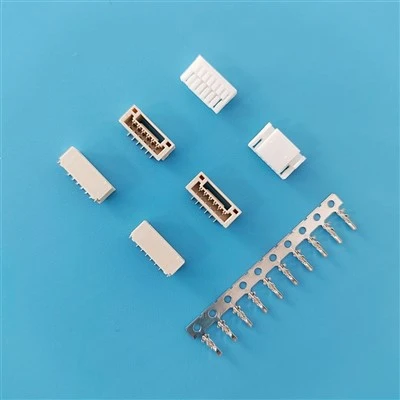
At the end of the day, the dielectric strength of 0.80mm pitch connectors isn’t a static number—it’s a performance metric that depends on design, materials, and testing. As a supplier, we’ve spent years refining our products to balance high density with reliable insulation, so you don’t have to choose between a small form factor and performance. If you’re designing a new project, troubleshooting a persistent short circuit, or just want to confirm the right connector for your voltage and environment, we’re here to review your requirements and walk you through our full product line. Reach out to our team to discuss your specific needs and get a tailored solution for your interconnect project.
0.60mm Pitch References
IPC-6013: Qualification and Performance Specification for Rigid Printed Boards
IEC 60068-2-1: Environmental testing – Part 2-1: Tests – Test A: Cold
IEC 60068-2-2: Environmental testing – Part 2-2: Tests – Test B: Dry heat
ASTM D149: Standard Test Method for Dielectric Breakdown Voltage and Dielectric Strength of Solid Electrical Insulating Materials at Commercial Power Frequencies
Dongguan Yinglian Electronics Co., Ltd.
As one of the most professional 0.80mm pitch suppliers in China, we have world-leading production equipment and strong manufacturing capabilities. We warmly welcome you to buy bulk high quality 0.80mm pitch at competitive price from our factory.
Address: No.12, Jidele Road, Juqi, Humen Town, Dongguan City, Guangdong Province, P.R. China
E-mail: James@csg-china.com
WebSite: https://www.csg-conn.com/
