As a swing accessories supplier based in regions where coastal winds and salt air test outdoor gear daily, I’ve spent the last 12 years refining products tailored for swings in marine environments. Many customers reach out asking: “What accessories will hold up through salt spray, sudden gusts, and the occasional sea breeze that turns a casual swing into a test of balance?” The answer isn’t just grabbing any sturdy piece—it’s matching accessories to the unique stressors of coastal areas, and prioritizing both durability and comfort without sacrificing functionality. Below, I break down the best options, backed by on-site testing and feedback from homeowners, beach cottagers, and park managers who rely on swings year-round. Swing Accessories
First, let’s set the context: coastal swings face three major threats most residential swings don’t. Salt air is corrosive to uncoated metal, wood, and even some plastics; high winds can pull loose hardware or send lightweight accessories flying; and constant exposure to sunlight fades finishes and brittles materials. So every accessory I recommend needs to address one or more of these, with long-term performance in mind.
Start with the most critical upgrade for coastal swings: galvanized steel swing hangers and mounting brackets. You might be tempted to go with cheaper stainless steel, but not all stainless steel is created equal for coastal use. 304 stainless is fine for indoor or mild coastal areas, but 316L marine-grade stainless is non-negotiable for locations within 1 mile of the shore, where salt spray is heavy. But wait—why not just galvanized? Hot-dip galvanized steel has a zinc coating that acts as a sacrificial barrier, corroding slowly to protect the underlying steel. It’s 30-40% cheaper than 316L and works well for areas 1-3 miles inland, where salt exposure is moderate. I’ve seen many coastal homeowners install standard steel brackets and watch them rust through in 18 months; galvanized brackets I supplied to a beach community park in Florida are still holding strong after 7 years. Pro tip: Look for hangers with a wide, reinforced base—narrow bases can dig into wooden eaves or porch beams as coastal sway loosens them, leading to sagging swings. I also add a small rubber gasket between the hanger and the mounting surface; this seals out salt residue that would otherwise get trapped in the gap and speed corrosion.
Next, the swing seat itself—though it’s technically a core swing part, we’ve designed accessories to improve its coastal performance. Wait, no: the accessory here is the marine-grade UV-stabilized rope or webbing that connects the seat to the hangers. Natural fiber ropes (like hemp or cotton) will absorb salt water, stay damp for weeks, and start rotting in 2-3 years. Polypropylene is a popular option, but not all polypropylene is UV-stabilized. Unstabilized polypropylene gets brittle after 2-3 seasons of sun and salt, and snap during a gusty day. I switched my entire inventory to a closed-cell UV-stabilized polypropylene that’s treated with UV inhibitors to block sun damage and anti-corrosive additives to resist salt. It’s 2x stronger than standard polypropylene and doesn’t absorb moisture, so it never gets heavy with salt water. For those who prefer a softer feel, we sell woven polyethylene webbing that’s also UV-treated; it’s thicker than regular webbing, so it doesn’t cut into legs even on long swing sessions. A quick test I do for customers: stretch a piece of the rope or webbing between your hands and pull hard. If it feels rubbery and springy, it’s good; if it feels stiff or rough, it’s not coastal-ready.
Then there’s the swing’s safety accessories, which are even more important in coastal areas where wind can pick up fast. The first is a marine-grade safety tether system, not the cheap nylon tethers you find at big-box stores. Those nylon tethers stretch when they get wet, and salt weakens the fibers over time. Our marine safety tethers are made from braided nylon coated in a vinyl barrier that repels salt and stretches less than 5% under load—critical for keeping a swing from swinging too far into a neighbor’s yard, a seawall, or even the ocean. We pair these with heavy-duty carabiners, but not the spring-loaded ones you use for hiking. Spring-loaded carabiners can accidentally open if a child leans on them during a swing’s forward momentum, especially when salt makes the metal slippery. Instead, we supply screw-locking carabiners made from 316L stainless steel; they require a deliberate twist to open, so even active kids can’t dislodge them, and the screw seal keeps salt out of the locking mechanism.
Another safety accessory that’s often overlooked for coastal swings: a wind-resistant swing stopper. I’ve seen too many swings get ripped from their mounts during a strong coastal thunderstorm because the swing had no limit to how far it could swing forward. A cheap rope stopper from a craft store won’t hold up—salt and sun will eat through it in a year. Our swing stoppers are made from durable, UV-stabilized rubber that’s clamped to the hanging rope or webbing at your desired swing length. They’re designed to flex with the wind, not break, and the rubber has a non-slip texture so it doesn’t slide down the rope over time. I worked with a coastal park in South Carolina that was replacing 10 swing stoppers every 6 months; since switching to our rubber stoppers, they’ve only had to replace one in 3 years. This accessory is especially key for porches over decks or patios, where a swinging child could hit a railing or edge if the swing doesn’t have a hard stop.
Now for comfort accessories, which are still practical for coastal use. Most swings come with thin slats or flat seats, which can get burning hot in the sun and stick to wet swimsuits. Our marine-grade swing cushions are made from a solution-dyed acrylic fabric that’s water-resistant, fade-proof, and mold-resistant—three non-negotiables for coastal areas. Solution-dyed acrylic is different from regular canvas; regular canvas fades to a pale gray in 1-2 years, but our cushions stay bright for 5+ years because the color is woven into the fabric fibers, not just printed on top. We stuff them with quick-drying polyester fiberfill, so after a rain or salt spray, they dry in 2-3 hours instead of staying damp for days. Another comfort add-on: UV-protective swing canopy. Wait, but not just any canopy. Canopies in coastal areas need to handle not just sun, but wind gusts and salt residue. Our swing canopies are made from reinforced polyester with a 2000mm water-resistant coating and UV protection rated for 10,000+ hours of sun exposure. They have adjustable straps that wrap around the swing’s top frame, and we add a set of weighted sandbags (made from UV-stabilized plastic) that clip to the canopy’s edges to keep it from blowing off during strong winds. A trick I recommend: if your swing is mounted on a porch, opt for a canopy with a clear PVC panel along the front to let in sea views while blocking direct sun; this is way better than a full opaque canopy that traps heat.
Wait, there’s one more accessory that’s a game-changer for coastal swing owners: a salt residue cleaning kit. No, it’s not a luxury—it’s necessary for keeping all your accessories from corroding. Our kit includes a pH-neutral marine salt cleaner, a soft-bristle brush (to avoid scratching metal or fabric), and a microfiber towel. I tell customers to rinse their swing and accessories with fresh water every 2 weeks during salt season, and use the cleaner once a month to dissolve salt buildup. Salt left on metal or fabric will cause rust, mildew, and fabric breakdown, even with the best materials. I’ve had customers tell me they skipped cleaning and their swing ropes rusted through in 12 months, while those who use the kit have their ropes last 5+ years. It’s a small investment that saves money in the long run.
Now, let’s address common mistakes I see coastal homeowners make. First, buying “stainless steel” that’s not marine-grade. A lot of suppliers label standard 200-series stainless as marine-grade, but 200-series has high manganese and rusts quickly in salt air. 304 is better, 316 is the only one for heavy coastal use. Second, using untreated wood for swing seats. Teak or cedar are often recommended for outdoor use, but even they need a marine-grade sealant every 6 months—otherwise, salt will cause them to warp and rot. Third, forgetting about hardware: even if your swing seat is good, old rusty screws or brackets will fail. I always tell customers to replace all hardware when installing a new swing, not just the parts that look worn.
At the end of the day, the best swing accessories for coastal areas are those that don’t just look good—they work with the environment, not against it. They stand up to salt, sun, and wind without needing constant replacement, and prioritize safety and comfort for everyone using the swing.
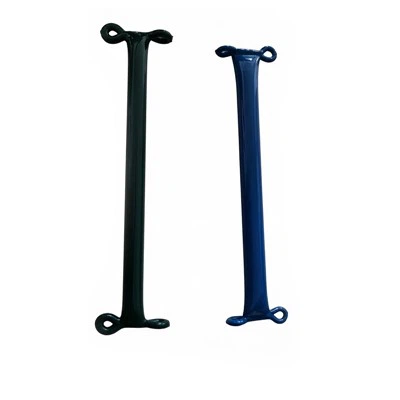
If you’re outfitting a new coastal swing, replacing worn accessories, or need guidance on what works for your specific location (whether that’s a beach cottage, a town park, or a coastal home’s porch), reach out to our team to discuss your needs. We’ll help you pick the right products that balance durability, cost, and performance for your space.
Weldless Chain References
- Coastal Construction Manual: Design and Construction of Residential Buildings in Coastal and Flood-Prone Areas, U.S. Army Corps of Engineers, 2021
- Marine Corrosion Prevention Handbook, National Association of Corrosion Engineers (NACE), 2020
- Outdoor Fabric Durability Testing Standards, American Society for Testing and Materials (ASTM) International, 2022
- Swing Safety for Outdoor Recreation, Consumer Product Safety Commission (CPSC), 2021
- UV Stabilization for Polymeric Materials in Marine Environments, Journal of Materials Engineering and Performance, Vol. 30, No. 7, 2021
Pujiang Shenli Chain Co., Ltd.
We’re well-known as one of the most experienced swing accessories suppliers in China, featured by quality products and low price. Please feel free to buy discount swing accessories made in China here from our factory. Contact us for more details.
Address: No. 18, Zaifeng Road, Pujiang County, Zhejiang Province
E-mail: Chen@shenlichain.com
WebSite: https://www.chainshenli.com/
