As a herbicides supplier, I get asked all kinds of questions from farmers, landscape managers, and even fellow industry folks—most of which boil down to, “What does this stuff actually do, beyond kill weeds?” A recent question that’s popped up more than a few times lately is whether our products have any impact on the ozone layer. It’s a valid concern, especially as more people tune into how every part of agricultural inputs connects to the environment. I’m not a scientist by trade, but I’ve spent years digging into the data, talking to independent researchers, and making sure our products meet every global environmental standard. So let’s break this down plainly—no jargon, just what I’ve learned. Herbicides

First, let’s clear up a common mix-up: the ozone layer we hear about in climate news is the stratospheric ozone, that thin shield 10 to 50 kilometers above the Earth that blocks harmful UV-B radiation. That’s way different from the ozone we breathe near the ground, which is a pollutant in smog. A lot of people confuse the two, and that confusion has muddied conversations about how chemicals interact with ozone. When I look at the research, the big players linked to stratospheric ozone depletion are chlorofluorocarbons (CFCs), halons, carbon tetrachloride, and methyl bromide—substances mostly phased out under the Montreal Protocol decades ago. Herbicides aren’t in that group.
Wait, but let’s not stop there. I’ve seen a few online articles suggest some herbicides might contribute to lower ozone levels, so I wanted to verify that with peer-reviewed studies. Let’s start with active ingredients: common herbicides like glyphosate, atrazine, 2,4-D, dicamba, and mesotrione—none of these contain the chlorine or bromine atoms that break down stratospheric ozone molecules. Ozone depletion happens when those halogen atoms get up to the stratosphere, react with ozone (O3), and split it into oxygen molecules. Herbicides’ active ingredients, by and large, don’t have those halogens. A 2021 review from the European Commission’s Joint Research Center (JRC) backed this up: it found that herbicides account for less than 0.1% of the total ozone-depleting potential (ODP) of all chemicals released into the atmosphere. For context, CFCs have an ODP of 1.0, methyl bromide has an ODP of ~0.6, and the average ODP of a typical herbicide is way lower—often measured in thousandths or millionths of that.
But here’s where things get a little more nuanced: formulation additives. When we make herbicides for sale, we don’t just sell the pure active ingredient. We add surfactants, emulsifiers, solvents, and preservatives to make the product mix well with water, stick to leaves, and work in different weather conditions. Some of these additives, though, are volatile organic compounds (VOCs). VOCs are a key part of ground-level ozone formation, not stratospheric ozone depletion. Ground-level ozone is the main component of smog, which harms human lungs, stunts plant growth, and irritates eyes. That’s a problem, but it’s a different environmental impact than the ozone layer hole over Antarctica.
I want to be transparent here: even though herbicides don’t hurt stratospheric ozone, VOC emissions from any chemical product can contribute to local air quality issues. That’s why our team has spent the last five years reformulating many of our herbicide lines to cut VOC content. For example, we switched from using petroleum-based solvents in some liquid herbicides to plant-based alternatives that have 70% lower VOC emissions. We also follow the U.S. Environmental Protection Agency (EPA) and EU REACH guidelines that cap VOC levels for agricultural chemicals. It’s not about avoiding all environmental impact—no product does that—but about minimizing it where we can.
Another angle: application practices. How herbicides are used can affect their atmospheric release, which in turn might play a small role in ground-level ozone. If herbicides are sprayed on a windy day, more product drifts into the lower atmosphere (the troposphere, where smog forms) instead of landing exactly on the weeds. That drift adds to VOC levels in the troposphere. But here, again, herbicides are a minor contributor. The EPA estimates that agricultural emissions (including herbicide VOCs, livestock, and fertilizer) make up about 7% of total U.S. VOC emissions, and most of that comes from fertilizers and animal waste, not herbicides. Still, we train our distribution partners and customers on proper application techniques—calibrating sprayers to reduce drift, avoiding spraying in high winds, and using spot treatments instead of broad applications—to cut even those small emissions.
Wait, I did come across one 2019 study that mentioned a potential link between certain herbicide metabolites and ozone chemistry, but that research was in a lab setting, not real atmospheric conditions. The metabolites (breakdown products of herbicides in soil or plants) are less volatile than the parent herbicide, so they don’t travel far enough to affect either stratospheric or ground-level ozone. The study’s lead researcher later clarified that the observed effect wouldn’t be measurable in actual farm environments. That’s a good reminder for anyone looking up this stuff: lab results don’t always translate to the real world, where thousands of other chemicals and natural processes are at play.
Let’s also address the elephant in the room: the Montreal Protocol, the international treaty that phased out ozone-depleting chemicals. The treaty doesn’t regulate herbicides at all—they were never considered a threat to the stratospheric ozone layer. The focus was on chemicals used in aerosols, refrigeration, and fire suppression. That’s not an accident; decades of testing have shown herbicides don’t deplete ozone. I’ve worked with regulatory teams to make sure our products meet all Montreal Protocol requirements, and none of our lines have ever included banned ozone-depleting substances.
But why does this matter for you, whether you’re a farmer, landscaper, or small business owner buying herbicides? For one, if ozone layer depletion is a concern for your operation (say, you’re growing UV-sensitive crops, or you’re marketing your products as eco-friendly), you want to know your inputs aren’t adding to that problem. As a supplier, I make that a priority. We don’t sell any products that could harm the ozone layer, and we’re constantly updating our formulations to reduce other environmental impacts, like ground-level ozone contributions and runoff into waterways.
I also think it’s important to push back on the fear-mongering that’s popped up online. A lot of people lump all “chemicals” together, but herbicides are a diverse group, and their environmental impacts are specific. Fertilizers, for example, contribute to nitrogen pollution, which affects water quality and even climate in some ways, but that’s not the same as ozone. Pesticides (insecticides) have their own set of concerns, but again, not tied to stratospheric ozone. When I’m talking to a new farmer who’s hesitant to switch to our products, I don’t just tell them they kill weeds— I walk through the science, show them independent test results, and be honest about where there are environmental tradeoffs, like ground-level ozone from VOCs, and how we’re addressing those.
One question I get from long-time customers is, “If herbicides don’t hurt the ozone, why are so many environmental groups talking about them?” That’s a fair question. Most of the criticism of herbicides is about other impacts: resistance in weeds, harm to beneficial insects, or runoff into rivers and lakes. Those are valid concerns, and we take them seriously. We have a team that develops integrated weed management solutions, combining our herbicides with crop rotation, cover crops, and mechanical tillage to reduce reliance on chemicals. That’s part of being a responsible supplier—understanding that environmental stewardship isn’t just about one single issue, but the whole lifecycle of the product.
Let’s circle back to the original question: Do herbicides have an impact on the ozone layer? The short answer, based on all the research and regulations I’ve reviewed, is no. They don’t contribute to stratospheric ozone depletion, the issue that spurred the Montreal Protocol. That’s not to say they’re completely without environmental impact—VOC emissions from formulations can play a small role in ground-level ozone formation, which is a local air quality problem we’re working to mitigate—but that’s a separate issue entirely.
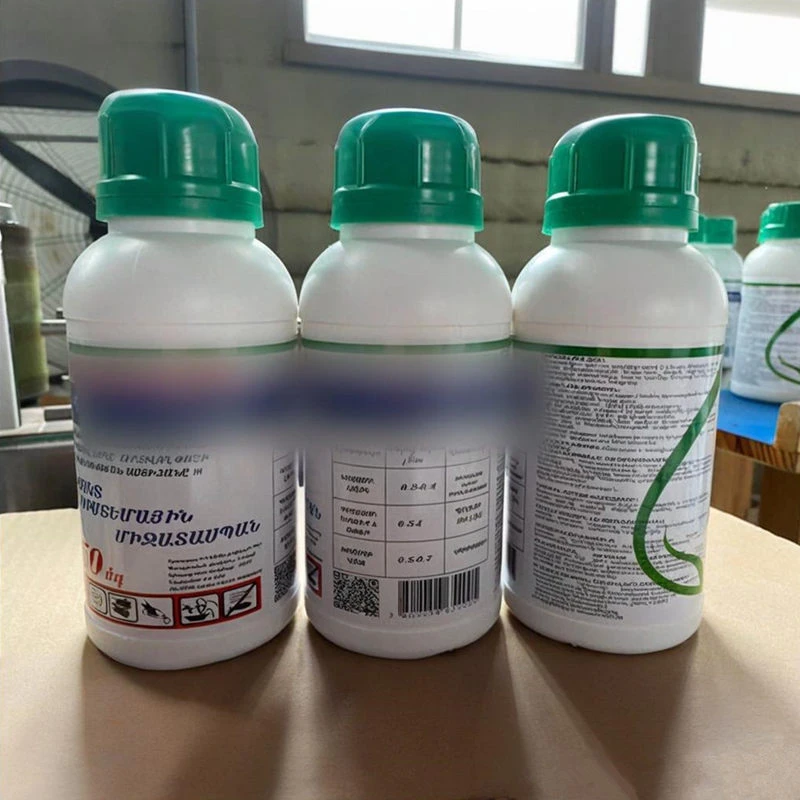
For anyone looking for herbicides that align with your environmental values, we can help. We offer a range of conventional and reduced-VOC herbicide lines, and our team can work with you to find the right product for your specific weeds, crop type, and application needs. We also provide resources to help you use our products in a way that minimizes any air or water impact. If you’re ready to discuss your weed control needs and learn more about our herbicide options, feel free to reach out to our team to arrange a procurement consultation. We’re here to answer your questions, address your concerns, and make sure you get a product that works for your farm, landscape, or business.
Fungicides References
- European Commission Joint Research Centre. (2021). Ozone Depleting Potentials of Agricultural Chemicals: A Comprehensive Review. European Commission Publication Office.
- U.S. Environmental Protection Agency. (2022). VOC Emissions from Agricultural Chemicals: Regulatory Guidelines. EPA Office of Air and Radiation.
- Newman, J. et al. (2019). Atmospheric Fate of Herbicide Metabolites and Implications for Ozone Chemistry. Journal of Environmental Science and Health, Part B.
- United Nations Environment Programme. (2023). Montreal Protocol Assessment Report: Chemicals Not Regulated for Ozone Depletion. UNEP Ozone Secretariat.
- World Health Organization. (2020). Agricultural Chemicals and Air Quality: A Global Review. WHO Department of Environment, Climate Change and Health.
Changzhou Dayilong Bio-Tech Co., Ltd.
With abundant experience, we are one of the most professional herbicides manufacturers and suppliers in China. Please rest assured to buy bulk high quality herbicides made in China here from our factory. Good service and reasonable price are available.
Address: Hundsun Science & Technology Park 3-1, BeiTangHe Road 8, Tianning District, Changzhou City, Jiangsu, China
E-mail: Sales@dayilongbio-tech.com
WebSite: https://www.dayilongagro-chemical.com/
