Hey there, if you’re knee-deep in flange bolting for high-pressure applications, you’ve definitely asked this question at least once: can Belleville washers actually hold up when the pressure’s cranked? I’m Jake, part of the team that supplies custom Belleville washers for exactly these kinds of tough jobs—think oil and gas piping, chemical processing, power plant boilers, even offshore rigs. We’ve seen everything from blowouts that could’ve been avoided to maintenance nightmares that cost crews thousands in downtime, so I’m not here to just regurgitate textbook facts. I’m gonna break this down like I would with a tech at the shop floor, no stuffy jargon, real-world stuff that actually matters. Flange Bolting Belleville Washer

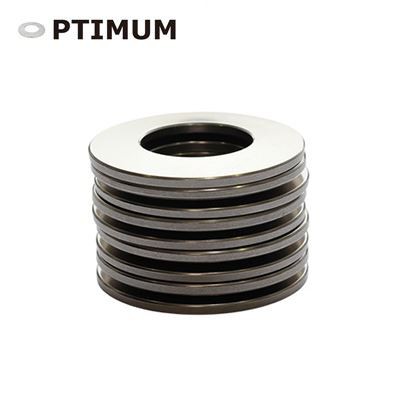
First off, let’s get on the same page about what Belleville washers are, because a lot of folks mix ’em up with regular flat washers or spring washers. Flat washers just spread load, right? Spring washers flex a little to stop bolts from loosening. But Belleville washers—sometimes called disc springs—are those conical, washer-shaped guys, usually made from high-strength steel (like 17-4 PH or 300 series stainless, or even alloy steel for super extreme stuff). They flex along their conical axis, which means they can handle way more load in a smaller space than regular springs, and they’ve got this “springback” that’s super useful for flanges. Now, high-pressure flange applications? These are systems where the internal pressure is so high—think 1,500 PSI and up, sometimes 15,000 PSI for specialty stuff—that even a tiny gap in the flange seal can cause leaks. And leaks in high-pressure lines? That’s not just a inconvenience; that’s a safety hazard, a compliance nightmare, and a huge money pit.
So the big question: do Belleville washers work here? The short answer is yes—but only if you use ’em right. A lot of folks I talk to at job sites overuse ’em, or use the wrong type, or don’t stack ’em properly, and that’s where the problems start. Let’s get into why they’re actually a good fit for high-pressure flanges, first.
When you bolt two flanges together, the whole point is to get a uniform bolt load that presses the flange gasket tight. If that load drops over time, the gasket compresses, gaps form, and boom—leak. Now, what makes flange bolts lose load in high-pressure apps? A few things: thermal expansion and contraction (plants heat up and cool down all day, bolts stretch and shrink), pressure cycling (high pressure spikes and drops, which jars bolts loose), and even relaxation of the bolt material over time. Regular flat washers don’t do squat about that. A single coil spring? Maybe, but it takes too much space, and can buckle under high axial load. Belleville washers? They’re designed to maintain that preload. Here’s how: when you tighten a bolt, you stack Belleville washers (usually in series or parallel) and compress them. As the bolt load decreases over time, the washers release their stored energy to make up for that drop. That’s their whole superpower for high-pressure flanges.
Take offshore rigs, for example. I worked with a maintenance team out of the Gulf Coast last year that was having constant leaks on their subsea pipeline flanges. They were using regular spring washers before, and every three months they had to pull the rig off production to re-torque bolts. We swapped out their old washers for a stack of our 17-4 PH Belleville discs, designed specifically for 2,000 PSI working pressure. They didn’t have to re-torque for 11 months, and when they did check, the preload was still 90% of what it should be. That’s the kind of win that makes suppliers like us happy, because we know we solved a real problem.
But wait—before you go stocking up on Belleville washers, let’s talk about the mistakes that people make that make them think “they don’t work” for high-pressure flanges. First, stack configuration. Series vs parallel—you can’t just mix these up for high pressure. Series stacking (stacking washers nested together like a stack of bowls) gives you more deflection (so more spring travel to compensate for load loss) but lower total load capacity. Parallel stacking (stacking washers next to each other, same height) gives you higher total load, same deflection. For high-pressure flanges, you usually want a combination of both, but it depends on the flange size, the bolt diameter, and the pressure rating. If you use all series when you need parallel, you’ll get way too much deflection, the bolts will stretch too far, and you’ll strip threads. If you use all parallel when you need series, you won’t get enough springback, so the preload will still drop over time. That’s a rookie mistake we see all the time.
Second, material selection. You can’t use cheap, generic Belleville washers from a hardware store for high-pressure flange work. Hardware store ones are usually low-carbon steel, made for light-duty stuff like garage doors. For high-pressure flanges, you need washers made from material that has high yield strength, good fatigue resistance, and corrosion resistance—because high-pressure systems often have corrosive media (acidic chemicals, saltwater offshore, moisture in power plants). 17-4 PH stainless steel is a go-to for most of our high-pressure clients—it’s heat-treatable, has a yield strength way higher than regular steel, and holds up great to corrosion. For ultra-extreme stuff, like 10,000 PSI chemical processing, we use alloy steel like 4140, or even Hastelloy if there’s super harsh chemicals. Using the wrong material here is a recipe for washer failure, which leads to flange leaks.
Third, preload calculation. This is non-negotiable for high-pressure flanges. A lot of guys just tighten bolts to “feel right” and slap on whatever washers are handy. No. Belleville washers have a specific load-deflection curve—you need to calculate how much deflection you need to get the required bolt preload for your specific flange, pressure, and gasket type. If you don’t calculate that, you’ll either: tighten so much that the washers permanently deform (that’s called “set,” and it’s bad—they lose their springback forever) so they don’t do their job, or you’ll tighten too little, so you still get load loss and leaks. We do custom calculations for every client at no extra cost, by the way—we’ve got engineers on staff who’ll walk through your flange specs, pressure rating, bolt size, and tell you exactly how many washers, what material, what stack configuration you need.
Now, let’s get real about limitations, because I’m not here to sell you something that’ll fail. Belleville washers aren’t perfect for every high-pressure flange job. For example, if you’ve got a flange that’s only rated for 150 PSI (low pressure, not high), they’re overkill—you’ll just be wasting money on washers you don’t need. Another limitation: temperature. If your system is over 600°F, you’ve got to pick a material that holds up at that temp—regular 17-4 PH starts to lose strength above that, so you’d go with a different alloy. Also, if your flange has really tight clearance around the bolts (super common on small-diameter flanges), you’ve got to pick a Belleville washer size that fits—can’t force a big washer into a tiny space, that’ll deform it.
Wait, let’s talk about a common counterpoint I hear: “Why not just use bolt load sensors?” Yeah, those exist, but they’re expensive, hard to install, and you can’t use ’em for permanent monitoring in a lot of cases. Belleville washers? They’re low-cost, easy to install, and they work passively—no power needed, no wiring, just set it and forget it. For high-pressure flanges that are in remote areas (offshore, pipeline sites in the middle of nowhere), that’s way better than sensors that need maintenance.
Another real-world example: a power plant in the Midwest we worked with last year. They had a main steam flange running at 1,200 PSI and 550°F, and they were having frequent leaks that were triggering safety shutdowns. They’d tried everything: re-torquing bolts every two weeks, adding more bolts, even switching to high-torque bolts. Nothing worked. We swapped their old flat washers for a stack of our custom 4140 alloy Belleville washers, calculated the exact preload they needed, and haven’t had a leak since. The maintenance team told us they saved over $80,000 in downtime in the first six months alone. That’s the kind of result that makes the headaches of getting the specs right worth it.
So let’s wrap up the key takeaways here, because I know you’re busy. 1) Yes, Belleville washers work for high-pressure flange applications—when used correctly. 2) The right stuff matters: pick high-strength, corrosion-resistant materials (17-4 PH, 4140 alloy, etc.), not cheap hardware store washers. 3) Stack configuration is critical: series for deflection, parallel for load, combine them based on your flange needs. 4) Do the math on preload—don’t guess. 5) They’re not for every job, but for most high-pressure flanges where you need to maintain preload and prevent leaks, they’re one of the best tools out there.
If you’re dealing with flange leaks, preload loss, or just want to stop wasting time and money on downtime with your high-pressure flanges, we’re here to help. We supply custom Belleville washers tailored to your exact application, provide free load calculations, and our team has 15+ years working with exactly these kinds of flange bolting jobs. No generic products, no hard sells, just solutions that work for your site. Reach out to our team to talk through your needs—we’re here to make sure your high-pressure flanges hold up, no leaks, no headaches, no downtime.
Conical Spring Washer References:
- Nilsson, K. (2003). Disc Springs: Design and Application. Industrial Press Inc.
- American Petroleum Institute (API). (2020). Standard 6A: Specification for Wellhead and Christmas Tree Equipment. 23rd Edition.
- ASME B16.5. (2021). Pipe Flanges and Flanged Fittings: NPS 1/2 through NPS 24 Metric/Inch Standard. American Society of Mechanical Engineers.
- Jones, R. (2018). Spring Solutions for High-Pressure Flange Applications. Journal of Industrial Fastening and Assembly, 45(2), 18-22.
Yangzhou Optimum Spring Manufacturing Co., Ltd.
As one of the most professional flange bolting belleville washer manufacturers and suppliers in China, we’re featured by quality products and good service. Please rest assured to buy customized flange bolting belleville washer made in China here from our factory. For more information, contact us now.
Address: No.9 West of Shuangtang Rd, Yangzhou, P.R. China 225000
E-mail: susie@optimum-spring.com
WebSite: https://www.optimum-spring.com/
