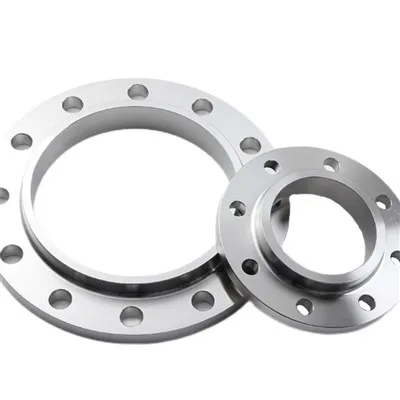
Hey everyone, if you’ve ever stood in front of a stack of flanges, bolts, and gaskets wondering “am I grabbing the right size here?” — same. As a flange supplier who’s fielded this exact question a hundred times over the last 12 years, I’m here to break this down like we’re chatting over a coffee (no stuffy engineering jargon, promise). Calculating flange bolt size doesn’t have to be rocket science, and if you skip a step, you can end up with leaks, broken bolts, or a total headache on a job site. Let’s dive in. Flange
First off, let’s get one thing straight: bolt size for flanges isn’t just guessing. It’s tied directly to two big factors — the flange itself and the pressure it’s holding back. If you ignore either, you’re setting yourself up for trouble. I’ve seen guys throw on a random bolt because it fit the hole, and 6 months later, a line ruptured because the bolts were too small to handle the system pressure. Don’t be that person.
Let’s start with the easy, non-negotiable base: matching the bolt to the flange’s bolt circle and holes. Every flange has what’s called a bolt circle diameter (BCD) — that’s the imaginary circle running through the center of each bolt hole, right? The number of holes is also fixed for a given flange size and class. For example, a 6-inch Class 150 flange has 8 bolt holes, a 6-inch Class 300 has 8 too, wait no — actually, hold on, let me correct that quick: 6-inch Class 300 has 10 holes, actually. Yeah, pressure class changes the number of holes, so you can’t just go by nominal flange size alone. So step one: pull the flange’s spec sheet (or if you’re at the job site, measure the BCD and count the holes) — this tells you how many bolts you need, and their maximum allowable diameter for that flange’s holes. Most standard flanges have 15/16” or 1 1/16” holes, so your bolt can’t be wider than that. That’s your upper limit for diameter, no exceptions.
Now the part that matters most: pressure loading. This is where most people mess up. The bolts have to create enough clamping force (called gasket load, if you wanna get fancy) to hold the two flange faces together and stop the process fluid from leaking. If the pressure pushes the flanges apart harder than the bolts can clamp them, you get a leak. So how do you calculate that clamping force? Let’s keep this simple, no complex engineering formulas you need a PhD for. The basic rule of thumb we use at the shop is: the total pressure force inside the flange equals the system pressure times the cross-sectional area of the pipe’s inside diameter (ID). Then, you divide that total force by the number of bolts, and that gives you the force each individual bolt has to handle. Then you match that to the bolt’s tensile strength — which depends on what the bolt is made of (low carbon steel, alloy steel, stainless, etc.).
Wait, let’s make that concrete (pun intended) with an example, because examples stick way better than formulas. Let’s say we have a 4-inch nominal flange, 150 psi working pressure, Class 150. First, get the ID of a 4-inch pipe — that’s about 4.026 inches (standard for schedule 40, which is the most common). The area of that ID is πr², so radius is half of 4.026, so ~2.013, squared is ~4.05, times π (~3.14) is ~12.7 square inches. Multiply that by pressure (150 psi) and total force needed is ~1,905 lbf (pounds of force pushing the flanges apart). Now, how many bolts does a 4-inch Class 150 flange have? Let me check my quick reference — yeah, 8. So each bolt has to handle 1,905 divided by 8, which is ~238 lbf per bolt. Now, what bolt do we use? Standard low carbon steel bolts have a tensile strength of around 60,000 psi (wait, no, proof load — let’s use proof load because that’s the actual stress you put on bolts when tightening). For a ½-inch diameter low carbon bolt, proof load is about 15,000 psi, cross-sectional area of the bolt is ~0.126 square inches, so that’s ~1,890 lbf per bolt. Wait, that’s way more than the 238 lbf we need — that works. Wait, but why do I sometimes use ⅝-inch bolts for Class 150 flanges? Oh right, there’s a safety factor! No one runs at 100% load, you need to add a safety margin, usually 3:1 or 4:1. That’s to account for things like gasket stiffness, tightening unevenly, temperature changes, etc. So in our example, 238 lbf times 3 is ~714 lbf needed. A ½-inch bolt can handle way more than that, so why ⅝? Wait, let’s adjust — maybe I used a ½-inch, but let’s check Class 300 for the same 4-inch. Class 300 is 300 psi, so total force is 12.7 * 300 = ~3,810 lbf. Number of bolts for 4-inch Class 300 is 8, so per bolt force is ~476 lbf, times 3 is ~1,428 lbf. A ½-inch bolt’s proof load is ~1,890 lbf — that works too, but wait, some specs call for ⅝-inch for Class 300 to have more clamping area around the gasket. Oh right, another thing: bolt size also ties to gasket size. The gasket has a contact area, and you need enough clamping force spread over that area to seal it properly, not just enough to hold the flanges together. If the bolt is too small, you can’t spread enough force evenly across the gasket, so you’ll get leaks even if the bolt is strong enough for pressure. That’s a key point I almost missed.
Now, temperature is another big one that a lot of people forget. Bolts get weaker when it’s hot, way weaker if you’re operating at 500°F or higher. That same ½-inch low carbon bolt that works fine at 100 psi and 70°F might only handle half the load at 500°F, so you’d need a bigger bolt, or a higher strength bolt like alloy steel, to compensate. I learned this the hard way early in my career — we had a refinery job where a pipe was running at 600°F, someone used standard ½-inch bolts, and after a month, two bolts snapped and we had a leak that shut down half the plant. Oops. Now we always ask for operating temperature first, not just pressure.
Wait, let’s also talk about standard bolt grades, because that’s a huge part of matching size and material. Grade 2 bolts are the basic low carbon ones, good for low pressure, ambient temp. Grade 5 is medium carbon, heat treated, stronger, works for Class 300 up to like 500°F. Grade 8 is the strongest carbon, good for higher temps and pressure, and stainless grades like 304 or 316 are for corrosive environments — they have lower tensile strength than Grade 8, so you might need a size up if you’re using stainless for high pressure. So when you’re calculating, you can’t separate the bolt grade from the size — a bigger lower grade bolt might be better than a smaller higher grade one if you’re dealing with corrosion, for example.
Let’s walk through a quick step-by-step that you can actually use on the job, no calculator overload:
-
Get your flange specs first. Write down: nominal pipe size (NPS), pressure class (150, 300, 600, etc.), and material of the flange. If you have the flange’s ASME B16.5 spec sheet, that’s perfect — that’s the standard for flanges in most places. If not, count the bolt holes, measure the bolt circle diameter, and note the hole size (usually stamped on the flange’s face or neck).
-
Get your system specs. Working pressure (PSIG) and maximum operating temperature. This is non-negotiable — if you don’t have these, you’re guessing.
-
Calculate total pressure force inside the flange. The formula is: Total Force = (ID of pipe)² * 0.7854 * PSIG. The 0.7854 is just π/4, so that’s the area of the pipe’s ID, easy.
-
Find force per bolt. Divide total force by the number of bolts in your flange. Don’t use the number of holes — wait, is every hole gonna have a bolt? Yeah, standard flanges use all bolts, so number of bolts = number of holes, unless you’re doing something weird.
-
Factor in safety and temperature. Multiply the per-bolt force by a safety factor — minimum 3 for most applications, 4 for anything critical (refineries, food and beverage, etc.). Then, if operating temp is over 200°F, add 10% to 50% to that number, depending on how hot it is (more heat = more adjustment). For example, 500°F would mean roughly double the required bolt load, since bolt strength drops that much.
-
Match to bolt size and grade. Now, grab a bolt property chart (we keep one taped to the wall at the shop for quick reference). Find the bolt size you need that has a proof load higher than your adjusted per-bolt force. Also, double check that the bolt diameter is smaller than the flange’s bolt hole — don’t jam a 1-inch bolt into a 15/16-inch hole, that’s impossible and will strip threads.
Wait, let’s test this step-by-step with a real common job: 8-inch Class 150 flange, 100 PSI, 100°F, carbon steel flange, Grade 2 bolts. Step 1: 8-inch NPS, Class 150, has 8 bolts. Step 2: 100 PSI, 100°F. Step 3: ID of 8-inch schedule 40 pipe is 7.981 inches. Total force = (7.981)² * 0.7854 * 100 = ~63.7 * 0.7854 * 100 = ~5,000 lbf. Step 4: Per bolt force = 5,000 / 8 = 625 lbf. Step 5: Safety factor 3 = 1,875 lbf, temp is low so no adjustment. Step 6: What bolt has proof load over 1,875 lbf? Grade 2 bolts: ½-inch is ~1,890 lbf, that’s perfect. Wait, that’s exactly what we stock for 8-inch Class 150 flanges, so that checks out. No more guessing, that works.
Now, what about common mistakes people make? Let’s list a few, because I see these all the time. First, using the flange’s outer diameter to calculate force — no, that’s the whole flange, the only part that matters is the pipe’s ID, that’s where the pressure is acting. Second, forgetting safety factor — I know it’s tempting to use the minimum size, but that’s how leaks happen. Third, ignoring temperature — like that 600°F job I had earlier. Fourth, mismatching bolt length — wait, bolt size isn’t just diameter, length matters too! Oh right, I almost forgot that. The bolt has to be long enough to go through both flanges, the gasket, and have enough threads sticking out to tighten a nut properly. Rule of thumb: bolt length should be twice the combined thickness of the two flanges plus the gasket thickness, plus about two extra threads. For example, two ½-inch thick flanges, a ⅛-inch gasket: (0.5 + 0.5) + 0.125 = 1.125, so add 2 threads, that’s a 1.25-inch bolt, so 1¼-inch length. Too short and the nut won’t tighten all the way, too long and threads will stick out too much, maybe hit other pipes or parts.
Another thing: if you’re dealing with non-standard flanges, like a custom flange for a unique application, don’t guess. Send us the specs, and we can calculate it for you — that’s what we’re here for. A lot of guys try to wing it on custom jobs and end up with parts that don’t fit or aren’t safe.
Wait, let’s talk about when you should just call a pro instead of calculating yourself. If you’re working with high pressure (over 1,000 PSI), cryogenic temps (super cold, which also makes bolts brittle), or corrosive service, leave the calculation to the experts. We work with all kinds of these jobs, so we can make sure every bolt is the right size and material for the job.
At the end of the day, calculating flange bolt size isn’t about being a genius — it’s about following the basics: match the bolt to the flange’s hole size, account for pressure, temperature, safety, and bolt strength, and don’t skip steps. I’ve been doing this for over a decade, and the guys who come back to us for their bolts are the ones who stop guessing and do it right the first time.
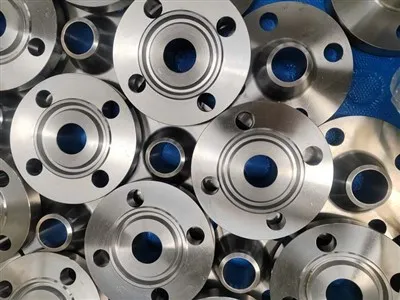
If you’re working on a project right now and need help making sure you’ve got the right flange, bolts, or gaskets, just reach out to us — we’re happy to walk through your specs, help with calculations, or get you the exact parts you need. No pressure, no sales pitch, just solid advice from a supplier who’s seen it all.
Gost 33259 Flange References
ASME B16.5, Pipe Flanges and Flanged Fittings
Machine Design, Bolt Strength and Load Calculations for Flanged Joints
API 650, Welded Tanks for Oil Storage (Section 5: Flanged Joint Requirements)References
ASME B16.5, Pipe Flanges and Flanged Fittings
Machine Design, Bolt Strength and Load Calculations for Flanged Joints
API 650, Welded Tanks for Oil Storage (Section 5: Flanged Joint Requirements)
Shanxi Xinshunda Flange Manufacturing Co., Ltd.
As one of the most professional flange manufacturers and suppliers in China, we also support customized service with competitive price. We warmly welcome you to wholesale high quality flange for sale here from our factory. For quotation, contact us now.
Address: Zhunagli Industrial Zone,jinchang Town,dingxiang,shanxi,china
E-mail: sales01@xinflange.com
WebSite: https://www.xinflange.com/
