If you’ve ever set up a home aquarium, installed a new filter for your backyard pond, or even dealt with a leaky faucet that had a weird, gritty aftertaste, you’ve probably used filter pads without thinking too hard about how they actually work. I’m part of a company that makes these pads—we’re not some big, faceless corporate lab, just a group of folks who’ve been hanging around water filtration for longer than I care to admit. One question we get all the time from customers, whether they’re hobbyists or small-scale farm owners, is this: “How do your filter pads mess with water flow?” It’s not a trivial question, honestly. Mess up the flow, and suddenly your filter stops working right, your tank’s fish get stressed, or your irrigation lines clog. Let’s break this down like we’d explain it to a friend who’s tinkering with their first aquarium, no stuffy jargon required. Filter Pads
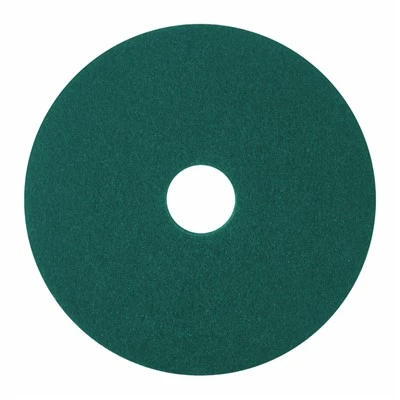
First, let’s get one thing straight: filter pads aren’t just thick pieces of felt you toss into a filter basket. They’re porous materials, made from everything from polypropylene fibers to cellulose blends, and their whole design revolves around balancing two opposites: how much junk they catch, and how easily water can move through them. Think of it like a coffee filter, but way more customizable. A basic coffee filter is super dense, so it catches all the coffee grounds, but you have to pour water slow to keep it from overflow. Our filter pads are built to fix that balance—we can tweak the porosity, fiber size, and thickness to make them either better at catching gunk or easier to let water move, depending on what someone needs.
Let’s start with porosity, because that’s the big one when it comes to flow. Porosity is just how many little holes there are in the pad, right? If a pad has high porosity, that means there’s way more empty space between the fibers, so water can zip through fast. But here’s the catch: high porosity also means fewer tiny gaps to catch debris. If you use a super porous pad in an aquarium, all the fish poop and leftover food will just blow right through it, and your filter media (like the stuff that breaks down toxic ammonia) won’t get the dirty water it needs to work. On the flip side, a low-porosity pad has tiny, tight gaps. It catches every bit of gunk—sand, sediment, even tiny bits of plant matter—but water has to squeeze through all those little holes, so flow slows way down. That’s a problem because if water moves too slow, your filter can’t process enough volume in a day, and things like ammonia can build up to dangerous levels.
We run into this all the time with customers who are new to using filter pads. Last month, a guy brought in a 100-gallon freshwater tank, super upset because his filter was making a weird noise and his fish were acting sluggish. Turns out he grabbed the thickest, densest filter pad he could find at a big box store, thinking it would catch more gunk. He was right about the gunk part, but it slowed his filter’s flow so much that the water was only moving half as fast as it should. The noise was the filter motor straining to push water through the clogged pad, and the fish were stressed because their water wasn’t getting enough oxygen. We swapped in a mid-porosity pad, and within a day, the filter was quiet and the fish were back to normal. That’s the trade-off no one tells you when you first start shopping around—you can’t just pick a pad that does one thing perfectly; you have to match it to what your system needs.
Next up, fiber structure, which plays a huge role too, way more than a lot of people realize. Our pads are made from either spun fibers or melt-blown fibers, and that difference changes flow completely. Spun fibers are longer, twisted loosely together, so there’s a little more give. A pad made with spun fibers lets water move through a bit faster than a melt-blown pad of the same thickness, because the gaps between the longer fibers are a little bigger. But melt-blown fibers are super fine, packed tight, so they catch smaller debris but restrict flow more. We also can blend different fiber types—mix a little cellulose, which is naturally absorbent, with polypropylene, which is durable and doesn’t break down fast—to adjust flow even more.
Wait, there’s also the part about how the pad gets used over time, right? A lot of people think filter pads are static, like a piece of plastic that never changes, but they get clogged. When debris builds up in the pad, the porosity drops, and flow slows down. That’s not a bad thing, exactly—clogging means the pad is working—but if you don’t clean or replace the pad regularly, it can slow flow to a stop. I’ve seen customers leave a filter pad in their pond for six months without changing it, and by the end, the pad was so full of muck that water was barely dripping through. The pond’s pump had to work so hard that it burned out. That’s another thing we always tell people: flow isn’t just a function of the pad when it’s new; it’s a cycle. Clean the pad when the pressure gauge on your filter ticks up (that’s a telltale sign flow is dropping) and you’ll keep things running smooth.
What about different use cases? Filter pads for a home aquarium are way different from pads for agricultural irrigation, or for a food and beverage system, right? For an aquarium, we need flow that’s steady enough to feed the biological filter, but not so fast that it disturbs the fish. For irrigation, the pad has to let water move fast enough to water a whole row of crops, but catch the sediment that would clog drip lines. A customer who runs a small-scale vegetable farm in Ohio came to us last year, saying their drip lines were clogging every two weeks, costing them hundreds in replacements. We sent them a low-density, high-flow pad that caught the fine soil particles without restricting the irrigation flow. Within a month, their drip lines only needed cleaning once every three months, and they saved way more than they spent on the pads. That’s the sweet spot we aim for every time—flow that’s tailored to the job, not a one-size-fits-all pad.
Let’s talk about pressure, too. Flow rate is measured in gallons per hour (GPH), right? The pressure of the water coming into the pad, plus the pad’s own resistance, determines how much water moves through. If your system has high incoming pressure, you can use a slightly denser pad without slowing things down too much. If your system has low pressure (like a small gravity-fed pond), you need a more porous pad, because there’s not enough force to push water through a tight pad. We do tests all the time in our workshop—we hook up pads to a test tank, measure GPH at different pressures, and adjust our pad specs accordingly. Last quarter, we had a customer who had a gravity-fed koi pond, and he was using a pad that worked great for his neighbor’s pressurized filter. The flow was so low that the pond started growing algae. We swapped in a more porous pad, and his GPH jumped by 40%—no algae, happy koi, problem solved.
A lot of people get confused between filter pads and other filter media, like ceramic rings or activated carbon, but filter pads are the frontline—they catch the big stuff before it clogs the more delicate media. That means their impact on flow is even more important than you might think. If the front pad clogs, everything behind it stops working. We get that, which is why we don’t just make “filter pads” in a single size. We have options for every flow rate, every use case, every budget. And we’re not just here to sell you a pad—we’re here to help you figure out what you need.
Wait, let’s address a common myth I hear all the time: “Thicker pads mean slower flow.” That’s not always true. Thickness can matter, but porosity and fiber structure matter more. We make a 2-inch thick high-porosity pad that flows faster than a 1-inch thick low-porosity pad. The thickness is useful for holding more debris, so you don’t have to clean it as often, but flow is mostly about how the pad is built, not how big it is. That’s a mistake a lot of new customers make—they think thicker = better, but it’s all about balance.
Another thing: temperature. It sounds weird, but water temperature affects flow through filter pads. Colder water is thicker, so it moves slower through the same pad than warm water. That’s why in the winter, aquarium owners might need a slightly more porous pad to keep their filter from slowing down, or they might have to clean the pad a little more often, because the colder water makes debris stick tighter. We’ve had customers in Minnesota who adjust their pad specs in the winter, and it makes a huge difference in their filter’s performance. It’s the kind of small detail you don’t think about until it goes wrong, right?
So, to wrap this up, filter pads affect water flow because they’re not just passive pieces of material—they’re active components that shape how water moves through your entire system. The balance of porosity, fiber type, thickness, and even how you maintain the pad over time determines if flow is too fast (so gunk gets through) or too slow (so your system stops working). There’s no universal “best” filter pad; it all depends on what you’re using it for, your system’s pressure, and how often you want to clean or replace the pad.
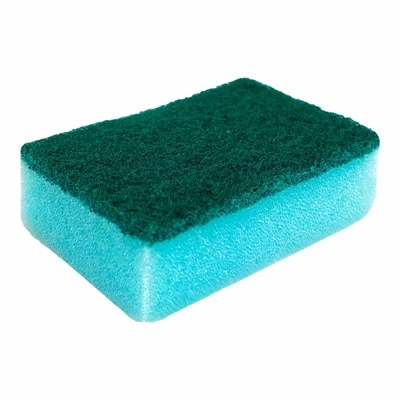
If you’re tired of dealing with filter pads that either clog too fast or slow your system down too much, we can help. We work with hobbyists, small-scale farmers, and even commercial businesses to design filter pads that hit exactly the flow rate you need, no guesswork, no wasting money on pads that don’t fit. If you want to talk through your setup, figure out what pad will work best for you, or place an order, reach out to us. We’re here to make filtration easier, not more complicated.
Floor Pads References
- Water Quality & Health Council. (2022). Porosity and Flow Rate in Water Filtration Media. National Ground Water Association.
- American Water Works Association. (2021). Filter Material Performance: Flow Resistance and Debris Retention. AWWA Standards.
- Fisheries Society of the British Isles. (2020). Aquarium Filtration Flow Dynamics: Impact of Filter Pad Structure on Fish Health. Journal of Fish Biology.
- Agricultural & Applied Economics Association. (2019). Cost-Benefit Analysis of Sediment Filter Pads for Irrigation Systems. AEA Publications.
Guangzhou YION New Material Technology Co., Ltd.
As one of the most professional filter pads manufacturers and suppliers in China, we offer a wide range of products with superior quality. Please feel free to buy customized filter pads made in China here from our factory. Also, quotation is available.
Address: Room 110, Building 2, No.2 Jinhuan Street, Nansha District, Guangzhou City, Guangdong Province, China.
E-mail: info@yiontech.cn
WebSite: https://www.yionpads.com/
